In recent years, more children with developmental delays and learning differences in Hong Kong have entered mainstream schools under the city’s inclusive education framework. Children gain opportunities for peer interaction, classroom participation, and exposure to everyday school life. However, many parents later discover that getting a child into school is not the same as getting a child fully supported.
Many SEN students continue to struggle with sensory overload, classroom transitions, communication difficulties, emotional regulation, social misunderstandings, and behavioral challenges that are often misunderstood as “bad behavior” or “lack of discipline.” This is why many parents and professionals emphasize an important point: school SEN support is important, but for many children, it is not enough on its own.
Children often need both inclusive support within school and individualized therapy outside school that directly teaches communication, behavior, learning, and self-regulation skills. For many families, the most effective progress happens when these two systems work together.
What School SEN Support Is Designed to Do
Hong Kong schools are increasingly developing SEN support structures through SEN coordinators (SENCOs), learning support teachers, classroom accommodations, social groups, and individualized education planning (IEP). At its best, school support helps SEN students participate safely in class, reduce stress during learning, improve classroom engagement, and prevent emotional isolation.
Effective SEN support is often very specific and structured. Helpful strategies may include visual schedules, transition preparation, sensory breaks, calm-down spaces, predictable routines, reduced verbal overload, and emotional regulation guidance. Structured instruction, simplified language, visual cues, explicit expectations, repetition, and checking for understanding can reduce confusion and anxiety while improving classroom participation.
The Importance of Social and Emotional Support
Social support is equally important. Some SEN students cope academically but gradually experience rejection from peers, bullying, masking exhaustion from trying to fit in or loss of confidence. This is mainly because there can be important basic skills like language, to participate in the class or to express themselves, that is still lacking. Good SEN support includes guided peer interaction, supervised social opportunities, emotional check-ins, and support for friendship-building skills. Children do not only need academic survival, they also need emotional belonging.
 Why School Support Alone Is Often Not Enough
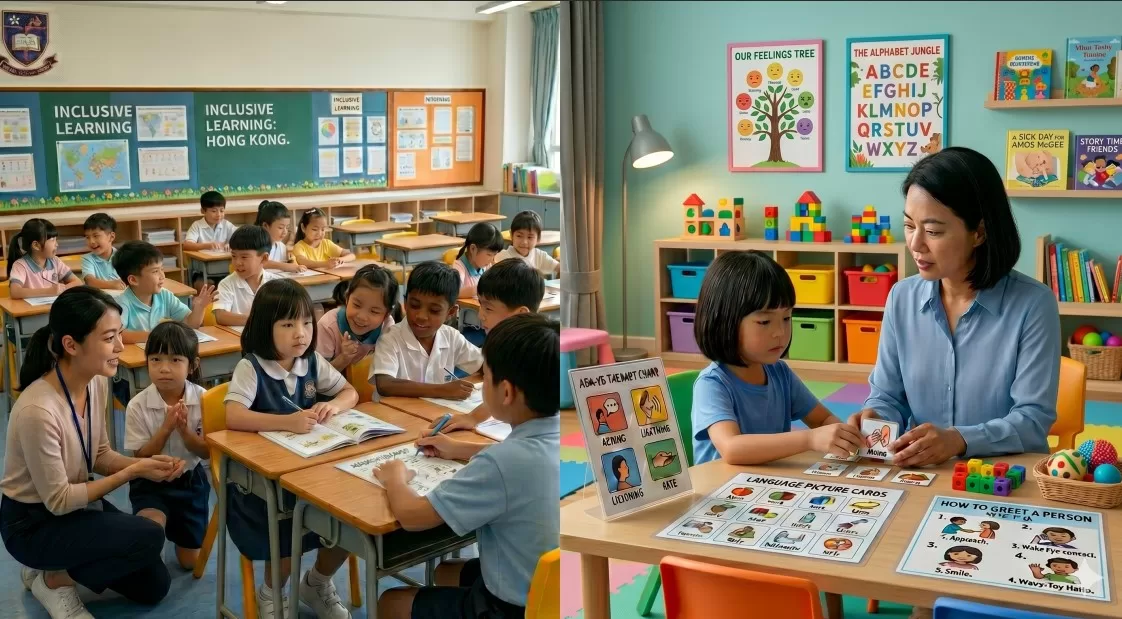 Why School Support Alone Is Often Not Enough
Although schools play a vital role, schools cannot always provide the level of individualized therapy some children require. Classrooms are large, teachers manage many students, and SEN resources are often stretched. School accommodations help children cope within the environment, but many SEN students also need direct teaching of communication skills, emotional regulation, flexible thinking, self-help skills, frustration tolerance, and behavior management.
This is why many professionals encourage parents not to stop therapy simply because a child has started school. School support helps children access education, while therapy helps children build the underlying skills needed to succeed independently.
Why Continuing ABA-VB Therapy Is Still Important
ABA-VB (Applied Behavior Analysis – Verbal Behavior) therapy is often used to strengthen communication, improve functional language, build social interaction skills, reduce harmful or disruptive behaviors, and increase independence. Therapy can also target highly individualized goals such as initiating conversations, coping with changes in routine, asking for help appropriately, emotional self-regulation, and independent daily living skills. These skills are needed to be able to learn and effectively function in school.
The Most Effective Approach: School, ABA – VB Therapy, and Home Support Together
For many children, the most effective approach is a combination of school support, ABA – VB therapy and home support working together. A child may receive accommodations in school, practice communication skills in therapy, and generalize those skills at home and socially. When parents, therapists, and schools communicate well together, children are more likely to generalize skills, experience less stress, and develop greater long-term independence.
Inclusive education works best when inclusion is not only physical placement in a classroom, but meaningful support that helps children truly participate, learn, and grow. The goal is not simply helping children “cope” in school, but helping them build the skills, confidence, and independence they will carry into real-life learning in the future.
