
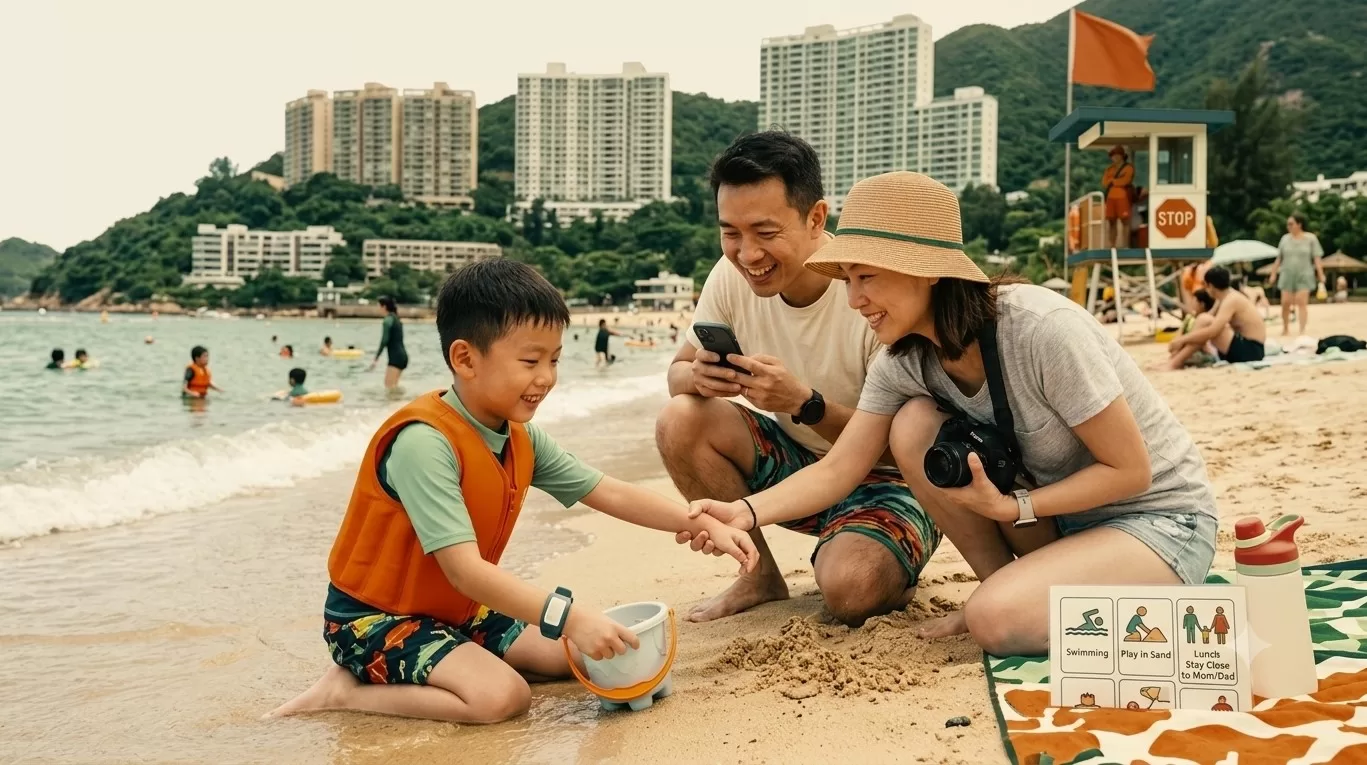
Helping Your Child Explore with Confidence
Summer is a wonderful time for families to slow down, explore new places and create lasting memories. In Hong Kong, children can enjoy a wide range of activities, from swimming at public pools and beaches to visiting parks, museums, theme parks, hiking trails and family attractions. Many families also travel overseas during the school holidays, giving children opportunities to experience new environments and routines.
While these activities are exciting, they can also present new challenges for children with autism and other developmental delays. Busy public places, unfamiliar surroundings, changes in routine, and excitement can increase the likelihood of a child wandering away from their caregiver or becoming overwhelmed. The good news is that by teaching safety skills of various summer adventures effectively and focusing on consistent preparation, families can help children enjoy summer while staying safe.
Enjoying Summer Activities Safely
Hong Kong offers many family-friendly destinations during the summer months, including public swimming pools, beaches, playgrounds, country parks, museums, indoor play centres and theme parks. Whether your family is spending the day at Repulse Bay, visiting Ocean Park, hiking an easy nature trail or travelling overseas for a holiday, planning ahead can make the experience smoother and safer.
Before heading out:
- Tell your child where you are going using simple language, pictures, or a visual schedule.
- Explain what they can expect and review any important safety rules.
- Pack familiar comfort items, snacks, water and any sensory supports your child may need.
- Dress your child in easily identifiable clothing if visiting crowded places.
- Take a recent photo of your child before leaving home so you have an up-to-date image if needed.
Preparing children in advance often reduces anxiety and helps them understand what is expected during the outing.
Understanding Why Some Children Wander
Wandering, sometimes called elopement, is not usually an act of defiance. Children may leave their caregiver because they are curious, attracted to something they enjoy, trying to escape loud or crowded environments or simply not yet aware of danger.
Busy places such as shopping malls, transport stations, beaches, swimming pools, airports and tourist attractions can make it easy for a child to become separated from their family within seconds.
Rather than relying only on constant supervision, families can gradually teach safety skills that help children become more aware of their surroundings and know what to do if they become separated.
Water Safety Deserves Special Attention
Many children naturally enjoy water. Swimming pools, beaches, splash parks, hotel pools and even decorative fountains can be highly attractive during the summer months.
Whenever your child is near water:
- Always provide close adult supervision, even if your child can swim.
- Swim only at locations where lifeguards are present whenever possible.
- Establish simple family rules such as waiting for permission before entering the water.
- Stay within arm’s reach of younger children or those who require additional support.
- Teach your child to stop at pool edges and beach boundaries until an adult says it is safe.
Swimming lessons are valuable, but learning to swim should never replace supervision. Children also benefit from learning safe behaviours around water, such as recognising pool rules, understanding warning signs and knowing when it is unsafe to enter the water.
If Your Child Becomes Separated
Despite careful planning, unexpected situations can happen.
If you realise your child is missing:
- Stay as calm as possible while acting immediately.
- Alert nearby staff, lifeguards, security personnel, or park employees right away.
- Provide a recent photo and describe what your child is wearing.
- Search nearby areas, especially places your child enjoys or may be naturally drawn to, such as playgrounds, water features, toy shops or quiet spaces.
- Follow the instructions of venue staff and contact emergency services if necessary.
Having a family emergency plan before leaving home allows everyone to respond more quickly and confidently.
Safety Skills Can Be Taught
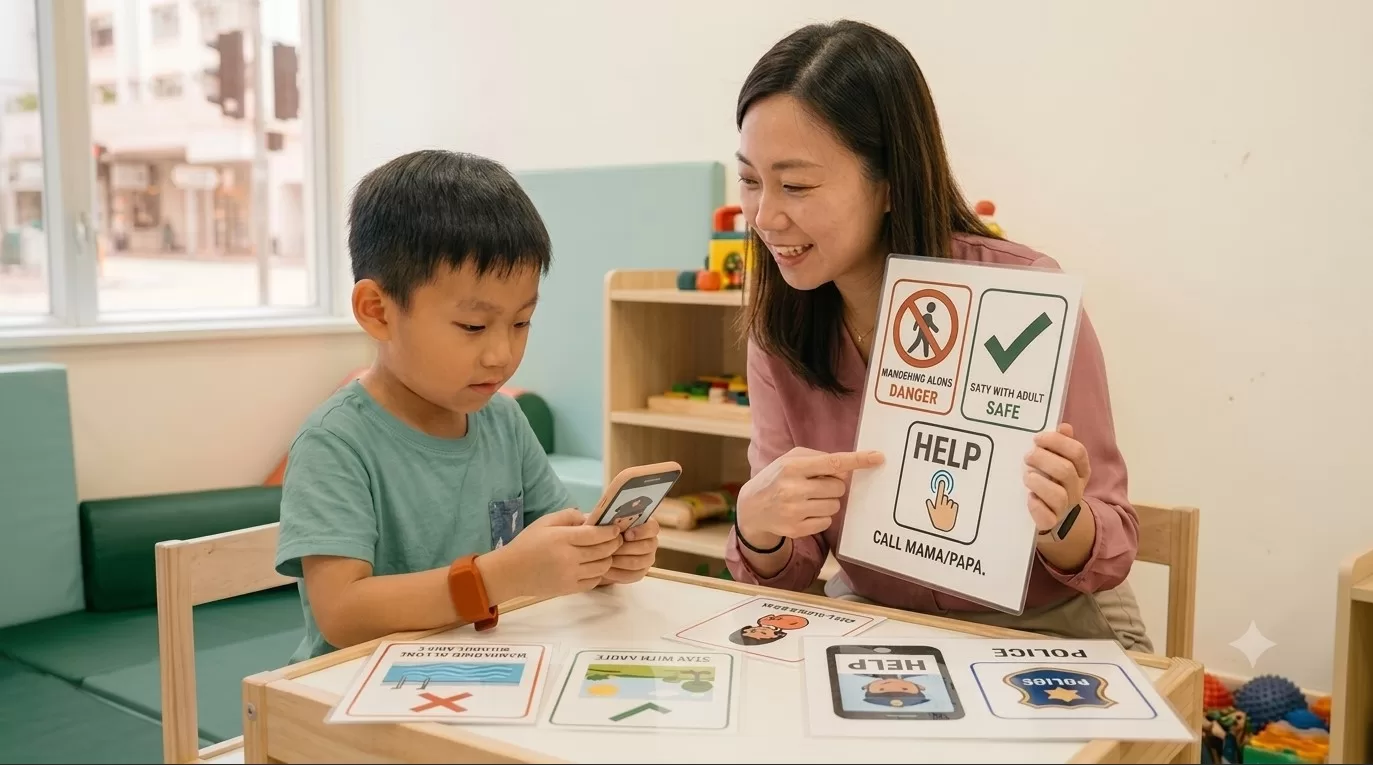
Safety is a skill that can be learned through repeated practice. Just like communication or daily living skills, safety awareness develops over time when children receive consistent teaching and opportunities to practise.
Individualised therapy can help children learn practical skills that support greater independence and community safety, including:
- Responding immediately when their name is called.
- Stopping when hearing “Stop” or “Wait.”
- Staying with a trusted adult during community outings.
- Identifying safe adults such as police officers, lifeguards, security guards or customer service staff.
- Learning when and how to ask for help.
- Memorising important personal information appropriate to their ability, such as their name, caregiver’s name or phone number.
- Learning to use a mobile phone or emergency contact feature when developmentally appropriate.
- Understanding simple danger concepts, including roads, strangers, deep water and unsafe areas.
- Following simple emergency routines through role play and real-life practice.
These skills are most effective when practised regularly both during therapy sessions and in everyday family routines.
Building Confidence for Summer Adventures
Every child deserves the opportunity to enjoy the excitement of summer, whether it is swimming, travelling, visiting new places or simply spending time outdoors with family and friends.
By preparing ahead, teaching practical safety skills and giving children regular opportunities to practise communication and self-care, families can help reduce risks while building confidence and independence.
Summer adventures become more enjoyable when children are not only supervised, but also equipped with the skills they need to stay safe, communicate effectively and seek help when necessary. With the right support and consistent guidance, every outing becomes another opportunity for children to learn, grow and participate more confidently in their community.
