For many parents, receiving a school offer feels like the finish line.
But getting into school and being ready for school are not quite the same thing.
For a child with autism, school readiness is about much more than knowing letters, numbers or how to write their name. Children also need skills that help them communicate, follow routines, learn in a group and become more independent.
The good news? Many of these skills can be practised at home before the first day arrives.
What Does “School Ready” Really Mean?
Think beyond academics.
A child may benefit from being able to:
- Follow simple instructions
- Sit and attend for short activities
- Move from one activity to another
- Wait and take turns
- Ask for help or a break
- Communicate basic needs
- Play or participate alongside other children
- Manage basic toileting, eating and dressing routines
- Cope with small changes
- Complete simple tasks more independently
Your child does not need to master every skill before starting school. Instead, identify the areas that may make the classroom easier—or harder—for them.
1. Find Out What Support the School Provides
Every school environment is different, so ask questions before your child starts.
For children with additional support needs in Hong Kong schools, support may involve teachers, a Special Educational Needs Coordinator (SENCO), Student Support Team and other professionals depending on the child’s needs and school arrangements.
Useful questions include:
- How does the school support autistic students?
- Who should I contact about my child’s support needs?
- How are communication and behaviour supported?
- What happens if my child struggles with transitions?
- How does the school communicate progress to parents?
The goal is to understand what your child’s actual school day will look like, not simply whether the school “provides SEN support.”
2. Practise the School Routine Before School Starts
Children who prefer predictability may find a completely new school routine challenging.
Start practising parts of the routine at home:
Morning: wake up → get dressed → breakfast → pack bag → shoes → leave home.
You can also practise carrying a backpack, walking to the school entrance, eating from a lunch box or travelling the school route.
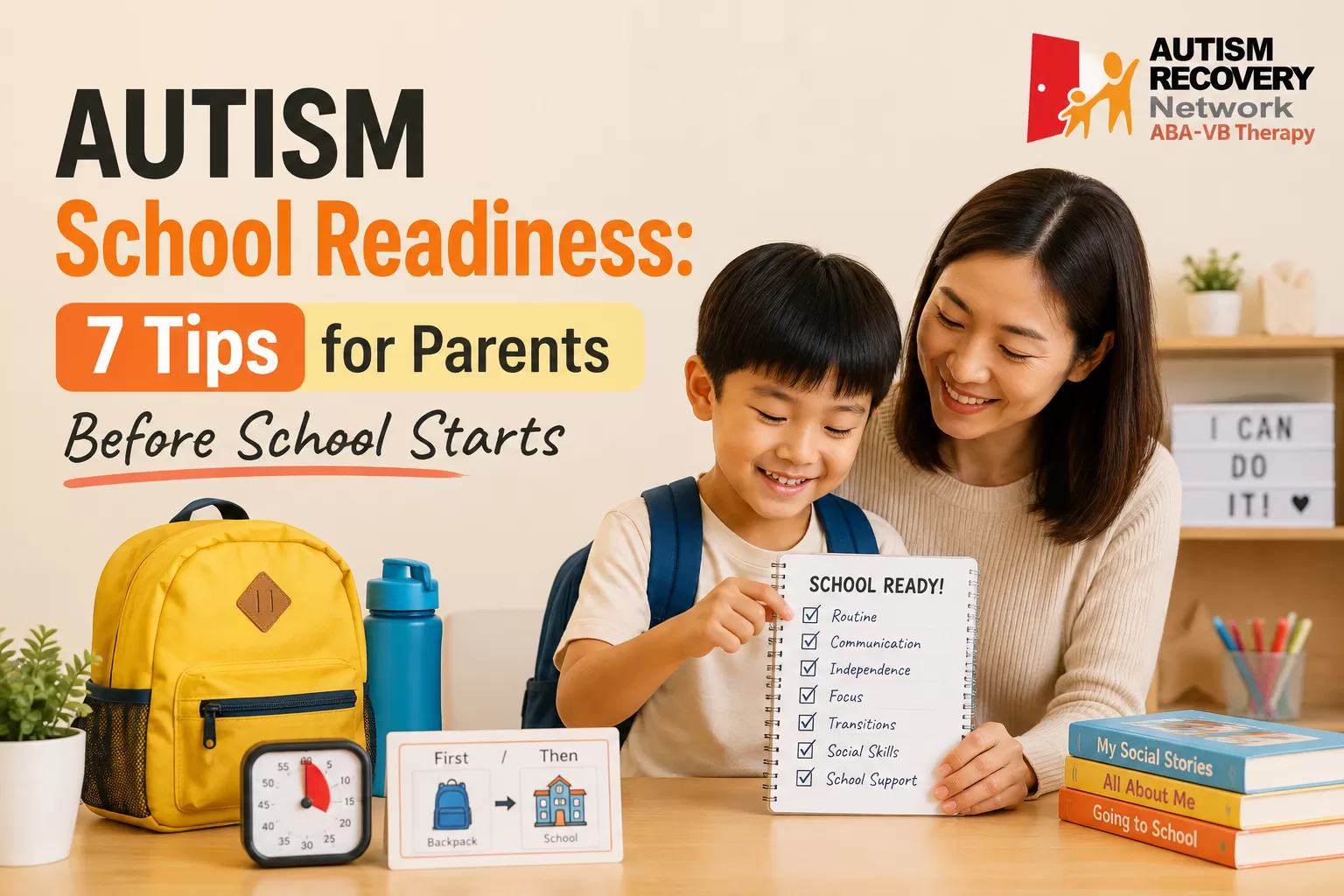
A simple visual schedule with pictures can help your child understand what happens next.
You do not need a perfect routine. Consistency and practice matter more.
3. Teach Everyday Classroom Skills
Turn daily activities into school-readiness practice.
For example:
Following instructions:
“Get your shoes.”
“Put your cup on the table.”
“Bring me your bag.”
Waiting:
Practise taking turns during simple games.
Sitting and attending:
Gradually increase how long your child stays with a story, puzzle, meal or craft.
Independent work:
Encourage your child to finish a small, familiar activity without continuous adult prompting.
Small moments like these can prepare children for common classroom expectations.
4. Make Communication a Priority
One of the most important school-readiness skills is being able to communicate a need.
Practise useful messages such as:
- “Help.”
- “Finished.”
- “Toilet.”
- “I don’t understand.”
- “Can I have a break?”
Communication does not have to be spoken. A child may use speech, gestures, pictures or an AAC system.
The goal is for your child to have a reliable way to tell other people what they need.
5. Build Independence One Small Skill at a Time
At school, adults may not always be available to help immediately.
Practise everyday skills such as:
- Washing hands
- Opening food containers
- Drinking independently
- Putting on shoes
- Carrying a backpack
- Packing belongings
- Tidying up
Rather than helping automatically, give your child a moment to try first.
A small skill such as opening a lunch box independently may seem simple, but it can make a big difference during a busy school day.
6. Practise Coping With Small Changes
School days are not always predictable.
The teacher may change. An activity may be cancelled. A favourite seat may be taken.
Build flexibility gradually at home by introducing manageable changes, such as:
- Taking a different route
- Changing the order of two activities
- Using a different cup
- Playing with a different toy
- Having another adult lead a familiar activity
Start small. The goal is not to remove routines, but to help your child learn that small changes can be handled safely.
7. Keep Home, School and Therapy Connected
Parents know how their child behaves across everyday situations. Teachers understand classroom expectations. Therapists can help identify skills and teaching strategies.
Sharing information between these people can make support more consistent.
Ask:
“What are the top skills we should all be working on right now?”
It is often more effective to have a few clear priorities than a long list of unrelated goals.
School Readiness Is Not About Being a “Perfect Student”
Your child does not need to sit perfectly, communicate perfectly or manage every routine independently before starting school.
School readiness is about giving them more tools to participate, communicate, cope and learn.
Every small skill counts.
Not Sure Where to Start?
If you are unsure which school-readiness skills your child should work on first, Autism Recovery Network (ARN) offers school preparation and social skills support focusing on practical skills such as communication, social interaction and participation in group settings.
ARN also offers a FREE 30-minute Parent Consultation where parents can discuss school readiness, current difficulties and possible next steps.
Preparing for school is not about rushing your child. It is about identifying the skills that will help them enter the classroom with greater confidence, communication and independence.
