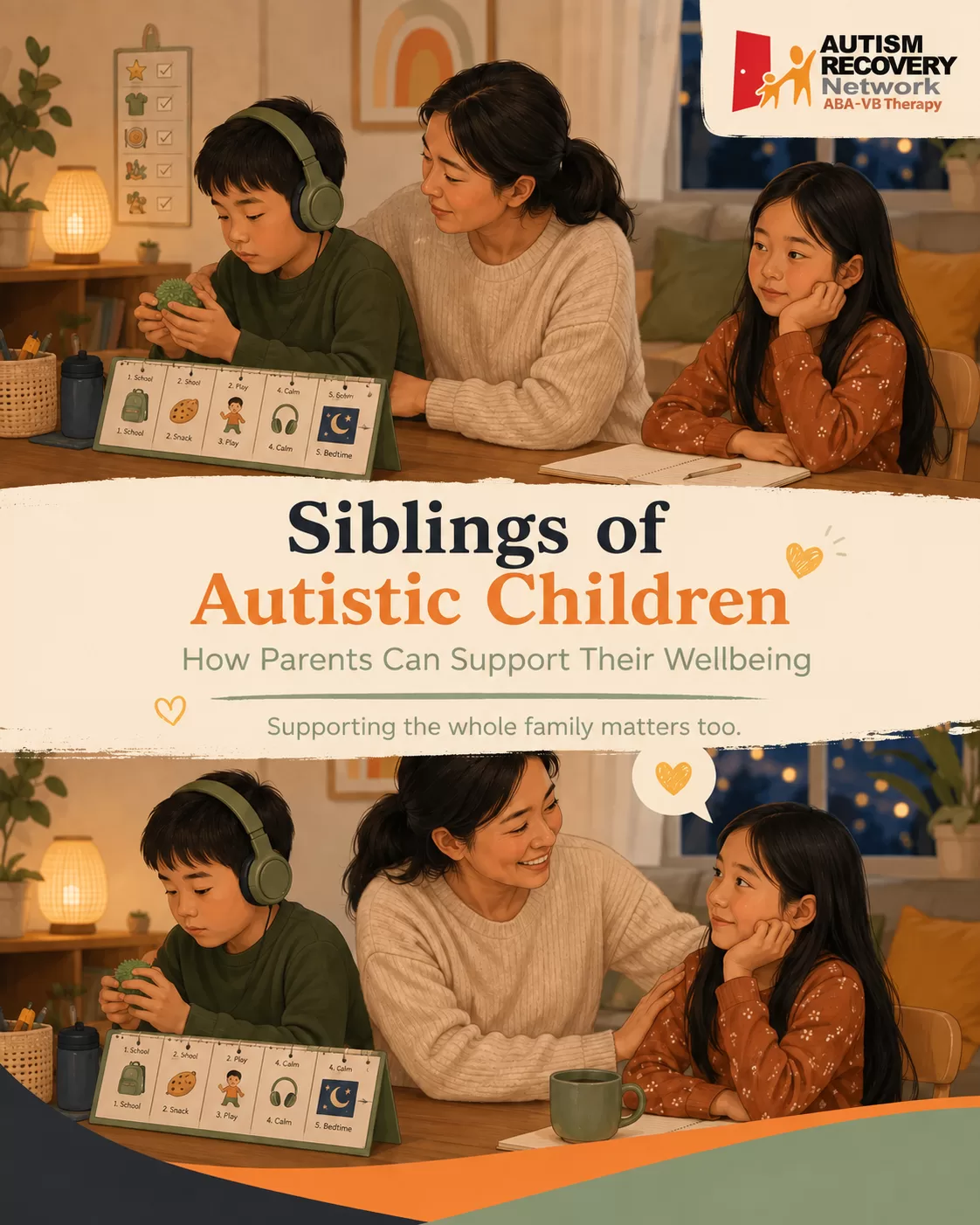
“Have you asked your daughter how her day went?”
It sounds like a simple question. However, when a family is supporting an autistic child, everyday life can become very busy.
There may be therapy sessions, school messages, behaviour concerns, communication goals, homework, meals and routines to manage. One child may naturally need more immediate attention, while their brother or sister quietly gets on with the day.
Because that sibling seems independent or “fine,” it can be easy to forget to check in.
Sometimes, one of the most important questions is simply:
“How was your day?”
What Does Research Say About Siblings of Autistic Children?
Having an autistic brother or sister does not mean a child will automatically experience emotional difficulties.
Research shows a much more mixed picture.
Some siblings report stress, anxiety, worries about family relationships or additional responsibilities. At the same time, many describe positive experiences, including greater empathy, compassion, maturity and acceptance of differences. A systematic review of siblings’ experiences found themes of both difficulties and strong feelings of love, connection and empathy.
The important message for parents is:
Do not assume your child is struggling—but do not assume they are fine simply because they are quiet.
Regular check-ins give them permission to tell you how they really feel.
Why Does Every Sibling Respond Differently?
There is no single “sibling experience.”
A younger child may wonder:
“Why does my brother get different rules?”
A teenager may worry:
“What will my friends think?”
As siblings grow older, questions can become more complicated:
“Will I need to look after my sister when we are adults?”
Research suggests that sibling experiences can be influenced by many factors, including age, family circumstances, the autistic child’s support needs, coping skills and the support available to the sibling themselves.
That is why parents should listen to the individual child rather than assuming how they should feel.
Mixed Feelings Are Okay
A sibling can love their autistic brother or sister and still sometimes feel:
- Frustrated
- Jealous
- Embarrassed
- Worried
- Angry
- Left out
- Concerned about the future
These feelings do not mean they are a bad sibling.
Research with siblings has repeatedly found a mixture of positive and difficult experiences. Some describe strong affection and empathy while also talking about reduced parental attention, extra responsibilities or challenging situations at home.
Children need to know they can say:
“That felt unfair.”
without immediately being corrected or made to feel guilty.
4 Ways Parents Can Support Siblings
1. Make Time for One-to-One Attention
It does not have to mean an expensive outing or an entire day together.
Ten minutes before bed, breakfast together, a walk to the shop or a short conversation in the car can remind a child:
“You matter too.”
Research suggests that individual time with parents and supportive family environments can contribute to better sibling wellbeing.
2. Listen Before Explaining
If your child says:
“It’s unfair that he always gets his way.”
avoid immediately responding:
“But your brother has autism.”
Instead, try:
“That sounds frustrating. Tell me what happened.”
You can explain the situation later. First, let your child know their feelings have been heard.
3. Explain Autism in an Age-Appropriate Way
Children are more likely to understand differences when they have appropriate information.
Explain why their sibling may communicate, learn, respond to sensory experiences or manage emotions differently.
These conversations should also change as the sibling grows. What makes sense to a six-year-old will be very different from the questions a 15-year-old may have.
Recent research suggests that understanding autism can help siblings make sense of their experiences and relationships.
4. Let Them Be a Sibling—Not Another Therapist
Brothers and sisters can certainly help each other. However, they should not feel responsible for managing behaviour, providing therapy or constantly supervising their autistic sibling.
They also need:
- Friendships
- Hobbies
- Privacy
- Time with parents
- Their own goals
- Their own future plans
Helping occasionally is part of family life. Feeling responsible for another child’s wellbeing is something different.
When Might a Sibling Need More Support?
Pay attention to significant or persistent changes such as:
- Anxiety or excessive worrying
- Frequent sadness
- Withdrawal from family or friends
- Major changes in behaviour
- Difficulties at school
- Sleep problems
- Strong resentment or guilt
- Constant worry about their sibling’s future
If these concerns continue or significantly affect daily life, consider speaking with an appropriate mental health, school or healthcare professional.
Sibling support groups may also help some children by giving them opportunities to understand autism, meet others with similar experiences and talk openly about their feelings. Recent research suggests that these programmes can provide useful opportunities for peer connection, coping and self-expression.
Supporting Autism Means Supporting the Whole Family
An autistic child may understandably require significant support. However, supporting the family also means noticing the children who ask for less.
Sometimes the sibling who seems the most independent still needs reassurance that their experiences, worries and achievements matter too.
So tonight, try asking:
“How was your day?”
Then give them enough time to answer.
Need Support for Your Family?
Every family experiences autism differently. If you have questions about your child’s behaviour, communication, development or everyday family routines, Autism Recovery Network offers a FREE 30-minute parent consultation with our supervisors.
Our team can listen to your concerns and help you explore practical next steps for supporting your child and family.
