“He understands everything I say. He knows where his shoes are, follows instructions, remembers routines and can find exactly what he wants. So why isn’t he talking yet?”
Many parents of children with autism or other developmental delays ask this question.
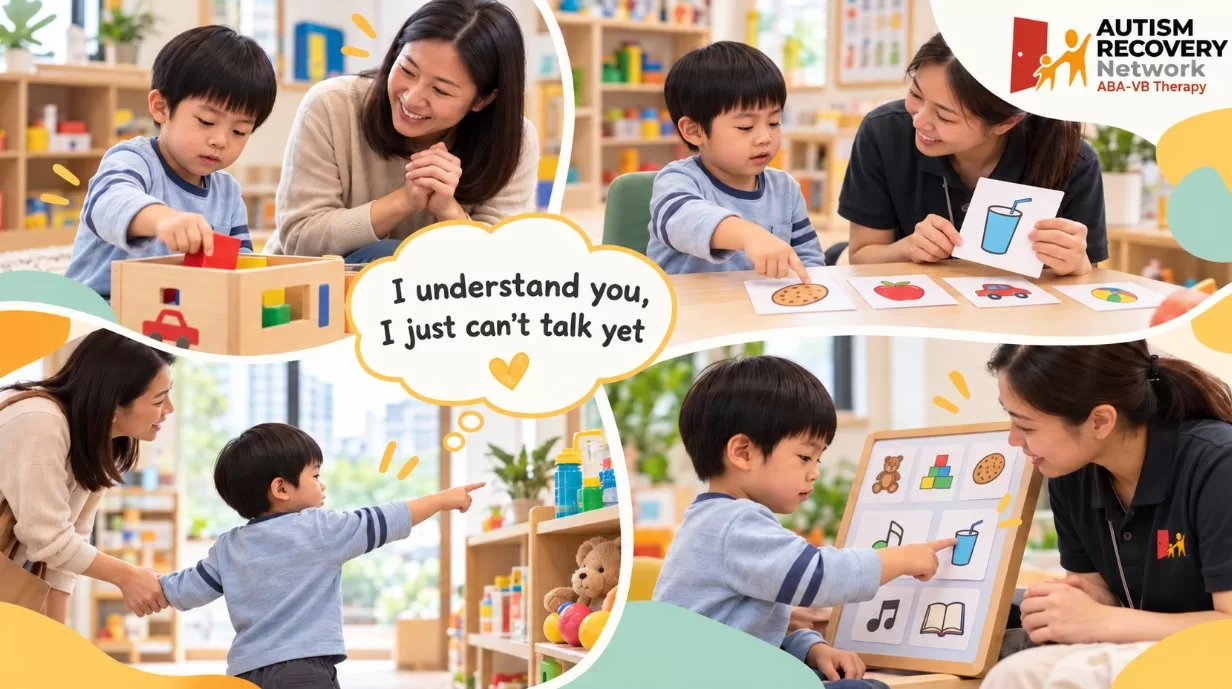
A child can sometimes understand much more language than they can express. This is because receptive language, understanding words and instructions and expressive language, using words, gestures, signs or other methods to communicate do not always develop at the same pace.
Why Can a Child Understand but Not Talk?
There is no single reason.
Some children may have an expressive language delay, meaning their understanding is developing faster than their ability to use words. Others may have difficulties with speech sounds, motor planning, social communication or learning how to use language functionally.
Delayed speech can also be associated with developmental conditions such as autism, hearing difficulties or broader language disorders. Some children are simply later to develop spoken language, but it can be difficult to know early on which children will naturally catch up and which will need more support.
This is why parents should look beyond the number of words a child says.
Language Is More Than Talking
Communication starts long before full sentences.
A child may communicate by:
- pointing or reaching
- looking toward a desired object
- pulling an adult toward something
- giving an object to ask for help
- using gestures or signs
- making sounds or word approximations
- choosing pictures
- using an AAC communication system
For example, a child who takes Mum’s hand and leads her to the refrigerator may not say, “I want juice,” but they are still communicating.
The goal is not simply to make a child talk. The goal is to help them develop a clear, functional and increasingly independent way to communicate.
What Should Parents Do?
If your child understands many things but uses very few words, avoid relying only on “wait and see.”
Consider a speech and language assessment to examine receptive language, expressive language, speech sounds, gestures, play and social communication. A hearing assessment is also important because hearing difficulties can affect speech development.
Depending on other concerns, a developmental assessment or autism assessment may also be recommended.
For children who are not yet speaking, a good assessment should examine communication beyond words, including gestures, eye gaze, vocalisations, play and how the child requests, refuses, comments or asks for help.
Start Evidence-Based Intervention Early
Parents do not need to wait for spoken language before teaching communication.
Support may include speech and language therapy, parent-mediated intervention, AAC when appropriate, and evidence-based behavioural intervention such as Applied Behaviour Analysis (ABA) and Verbal Behaviour-based teaching (ABA-VB).
In ABA-VB, communication is taught for a purpose. For example, instead of only teaching a child to name “bubbles,” the child may learn to request bubbles, ask for help, answer questions and comment during play.
Early intervention can also target joint attention, imitation, play, social interaction and independence—all skills that can support later communication and learning.
Build From Your Child’s Strengths
Do not let delayed speech hide everything your child can already do.
Perhaps your child is excellent at puzzles, remembers songs, recognizes letters, loves numbers or has an incredible memory.
Use those strengths as a bridge to learning.
A child who loves trains can practise requesting trains, choosing colours, taking turns and commenting during play. A child who loves letters can use written words or pictures to support communication.
Instead of asking only, “Why isn’t my child talking?”, also ask:
“How is my child communicating now, what are their strengths, and how can we help communication grow from here?”
“When we recognise how a child already communicates, build on their strengths, and provide the right support early, we give them more ways to connect, learn, and make their voice heard—whether that voice is spoken or not.”
