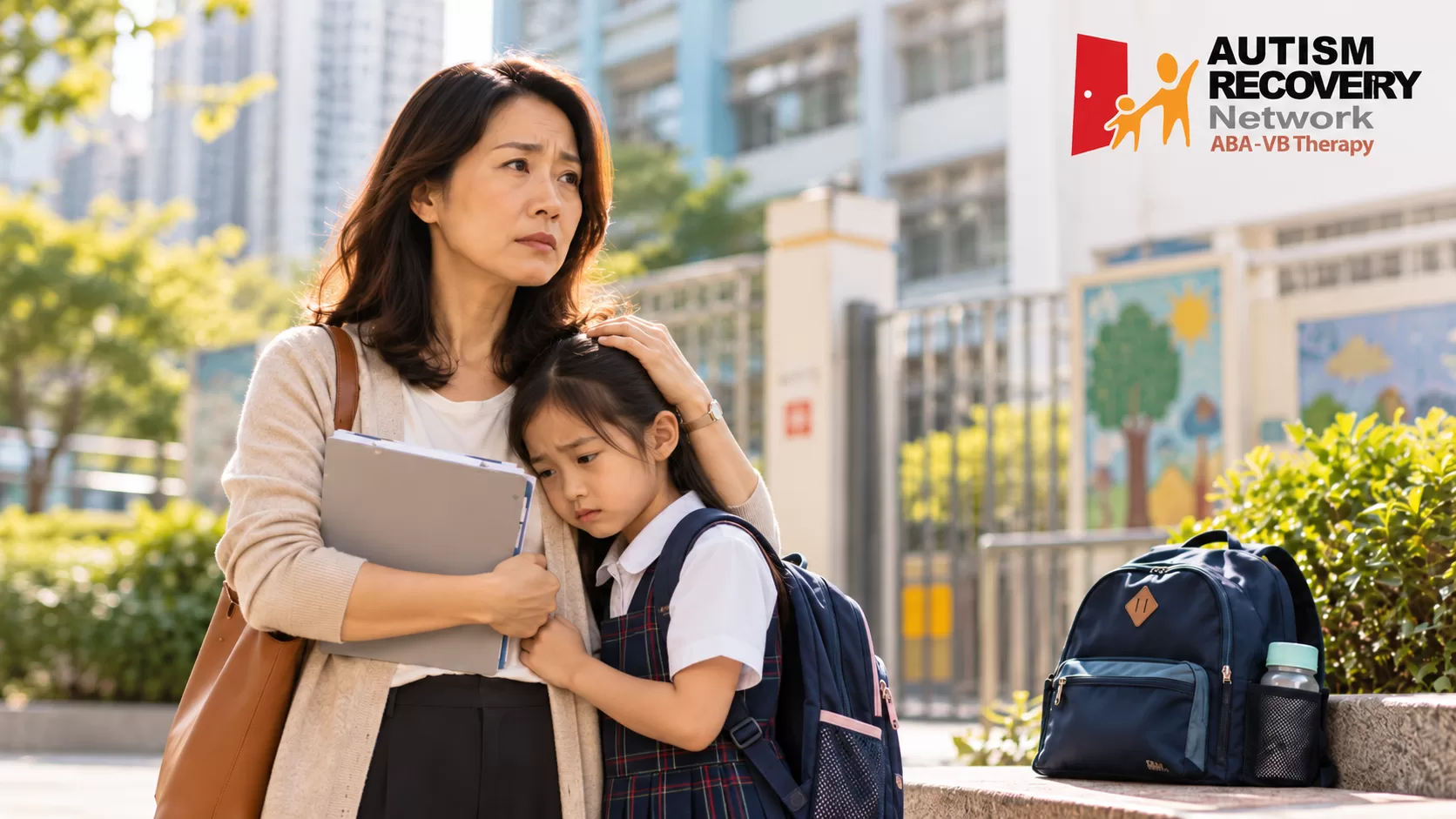
“My child says the other children don’t want him there. Is this bullying—or just a friendship problem?”
For parents of autistic children, the answer is not always obvious.
A child may struggle to explain exactly what happened, misunderstand another child’s intentions, laugh along even when a joke is hurtful, or tell you only one small part of a bigger situation.
Some autistic children may not even recognise that what is happening is bullying.
Before confronting another family or assuming the worst, here are six practical first steps.
1. Friendship Conflict or Bullying?
Not every disagreement between children is bullying.
Friends argue. Children sometimes exclude each other, become frustrated during games or say something hurtful and later repair the relationship.
Hong Kong’s Education Bureau describes bullying as involving three key elements: repetition, malicious intent and an imbalance of power. It can include physical, verbal and cyberbullying.
Watch for patterns such as repeated teasing, exclusion, taking belongings, physical intimidation, online harassment or deliberately using your child’s differences to embarrass or provoke them.
Research has also found that autistic students can face a higher risk of bullying victimisation than typically developing peers, although individual experiences vary considerably.
2. Record First—Don’t Confront the Other Family
When a parent believes their child is being hurt, the natural reaction may be:
“I need to speak to that child’s parents.”
Usually, start by gathering information instead.
Record:
- Date and location
- People involved
- What your child said
- What staff observed
- Missing or damaged belongings
- Injuries
- Changes you notice afterwards
Keep facts separate from conclusions.
Instead of:
“Three boys bullied Daniel all week.”
write:
“Daniel said three boys hid his pencil case during lunch on Monday and Tuesday.”
Specific information gives the school something concrete to investigate.
3. Approach the School in Writing
Start with the class or form teacher. Depending on the school, you may also involve the SENCO, Student Support Team, school social worker, counsellor or senior management.
Even if you speak in person, follow up in writing.
For example:
“My child has reported several incidents involving the same students during lunch. Could the school please investigate what has been happening and let us know what support can be put in place?”
Ask practical questions:
Who will observe the situation? Where will they observe? Who is our contact person? When will we receive an update?
The Education Bureau states that schools should take positive measures against bullying and promote a safe school environment.
4. Don’t Demand the Whole Story at Once
“Tell me exactly what happened!”
For some autistic children, that question is simply too big.
They may struggle to sequence events, explain emotions or remember details while distressed.
Try smaller questions:
“Who was there?”
“Where were you?”
“What happened first?”
“What happened next?”
Drawings, visual choices, photographs, written options or simple timelines may also help.
Avoid repeatedly asking until your child gives the answer you expect. The goal is to help them communicate, not to interrogate them.
Sometimes information comes out gradually.
5. What If My Child Doesn’t Know It Is Bullying?
This can be particularly difficult.
An autistic child may believe another student is their friend because that person talks to them frequently—even when the interactions are manipulative or humiliating.
For example:
“Give me your snack or we won’t be friends.”
“Say this bad word and everyone will laugh.”
Rather than teaching only:
“Tell someone if you’re bullied,”
teach concrete social rules:
A friend should stop when you say “Stop.”
You don’t have to do something embarrassing to keep a friend.
Someone repeatedly taking your belongings after you say “No” is not okay.
Role-play can help children practise “Stop,” “No,” “I don’t like that,” walking away and finding a trusted adult.
Hong Kong’s Education Bureau also provides tiered support for autistic students focusing on areas including social communication, emotional regulation and adaptation.
Request stronger school intervention when:
- Incidents continue
- There are threats or physical aggression
- Your child is repeatedly targeted
- Cyberbullying is involved
- Your child starts avoiding school
- Their emotional wellbeing is clearly affected
Ask for a clear support and safety plan.
This might include additional supervision, a named safe adult, changes to seating or transitions, structured peer support, a safe place to go and a clear way for your child to report future incidents.
Your child may also benefit from learning self-advocacy, social problem-solving, functional communication and how to recognise unsafe interactions.
These skills do not make the child responsible for stopping bullying. Adults and schools remain responsible for creating a safe environment.
Start With the Pattern, Not the Panic
If you suspect bullying:
Observe. Record. Listen. Contact the school. Teach your child how to ask for help. Then follow up.
Sometimes the situation will turn out to be friendship conflict. Sometimes it will reveal a repeated pattern requiring stronger intervention.
Either way, calm documentation and consistent communication can help you understand what your child needs next.
Does Your Child Need More Support With Social Safety?
Autism Recovery Network provides individualised ABA-VB programmes that may support functional communication, social understanding, self-advocacy, recognising unsafe situations and asking for help.
ARN also offers a FREE 30-minute parent consultation with an ARN Supervisor. Parents can discuss their child’s current social and communication difficulties, school concerns and possible next steps.
