ABA Therapy for Special Education Needs (SEN) in Hong Kong Schools
Supporting learning, behaviour, and independence in everyday settings.
Common Challenges for School-Age Children
Many parents reach this stage feeling uncertain and frustrated. Their child may:
- Understand academic content, but struggle to apply it independently
- Have difficulty managing emotions or behaviour in school
- Find transitions, changes, or social situations overwhelming
- Require increasing support to stay engaged and organised
These challenges are common — and they often signal a need for support that goes beyond academic learning alone.
🌟 Bridging the Gap: Individualized ABA Support for SEN Students
In Hong Kong, many children with SEN attend mainstream schools. While schools aim to provide support, classroom environments, time constraints, and available resources can make it difficult to address individual functional needs in depth.
As academic demands increase, challenges related to behaviour, emotional regulation, organisation, and social understanding often become more apparent. Families may feel that concerns are recognised — but not fully addressed.
This gap is where additional, structured support can make a meaningful difference.
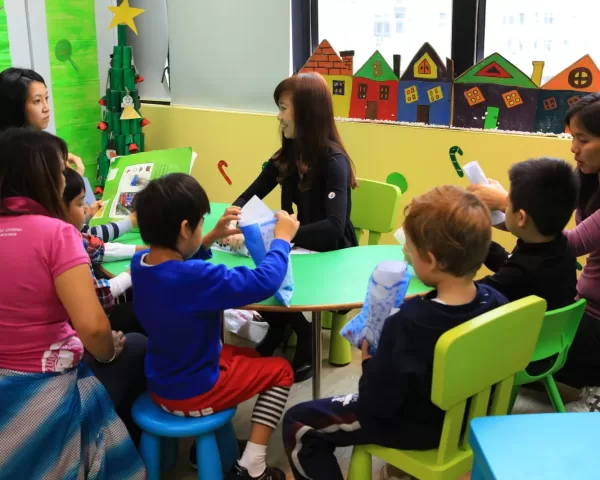
Developing Emotional Regulation and Social Skills for Mainstream Schooling
At the school-age stage, ABA therapy focuses on functional skills that support everyday success. Rather than repeating early learning goals, programs are adapted to the child’s current environment, expectations, and challenges.
Focus areas typically include:
Learning and task independence
Emotional regulation and coping skills
Social understanding and communication
Flexibility with changes and transitions
Daily routines at home and in school settings
Goals are introduced gradually, reviewed regularly, and adjusted as children grow and respond.
🌈 What Makes School-Age Support Different
School-age support requires balance. Expectations are higher, environments are more complex, and children are more aware of themselves and others.
Effective support must be realistic, respectful, and appropriate to a child’s cognitive and emotional development — supporting growth without overwhelming the child.
Professional supervision ensures that programs remain meaningful and aligned with real-life demands, not just measurable outcomes.
🌈 What Families Can Expect at ARN
Families working with ARN can expect:
Clear explanations of goals and priorities
Ongoing communication and adjustment
A structured but flexible approach
Honest conversations about readiness, progress, and expectations
School-age support is not about quick fixes. It is about helping children build skills that support long-term independence and participation.
ABOUT SPECIAL EDUCATION IN HONG KONG – FAQS:
Special education in Hong Kong is essential instruction designed specifically to cater to the unique learning needs of children with any kind of disability. This means that SEN education is individually developed so as to address a child’s specific needs. Since each child has unique needs, the pedagogy is individualized to ensure the overall development of necessary skills.
Under the current policy, Special Educational Needs (SEN) in Hong Kong include visual impairment, hearing impairment, physical disabilities, cognitive disability, speech and language impairment, autism spectrum disorders (ASD), attention-deficit/ hyperactivity disorder (ADHD), and specific learning difficulties. These disorders and disabilities often interfere with the daily functioning, skill development, and academic achievements of children, thereby requiring special assistance for their education.
Special education programs are designed for children who have underdeveloped skills and abilities and require more assistance than others who are cognitively and socially more developed. School districts follow a well-defined process to determine who is eligible for special education. The process involves a complete evaluation of the SEN child conducted by a qualified instructor to understand his or her psyche. The assessment also looks at other aspects of their development to get a holistic understanding of their skills and abilities. Either the school or the child’s parents/caregivers can request the evaluation.
The education process and special support services outlined in the IEP of a child do not necessarily defray his or her entire education. It only addresses those educational needs that result from his or her physical or learning disability. For example, if a child requires special education support for all activities throughout the school day, the IEP will include all these needs. However, if the SEN Hong Kong child doesn’t require special support in one or more areas, such as music, science, or physical education, then the IEP of the child will exclude these subjects. In such an instance, the child will have to access education in these subjects through the general class curriculum without additional special education services.
The domain of special education needs clarity on two terms, “modification” and “accommodation.” A modification essentially means a change in what is being taught or expected from the student. An example of this would be making a class assignment easier for the student so that he or she does not have to work on the same level as his or her peers. On the other hand, accommodation is a change that helps the SEN child get over or work around his or her disability. An example of this would be allowing a SEN Hong Kong child who faces writing difficulties to answer his or her tests orally.
🌟 Unsure What Support Looks Like at This Stage?
Looking for early intervention?
