Choosing an ABA provider is an important decision. You are not only selecting therapy sessions—you are trusting a team with your child’s development, your family’s time and a significant financial investment.
Recent events in Hong Kong have left some families concerned after a SEN service provider unexpectedly ceased operations. Parents faced financial losses, disrupted therapy and uncertainty about how to continue their children’s programmes.
Although situations like this are uncommon, they remind families that choosing an ABA provider involves more than finding an available timetable. Parents should also consider the provider’s qualifications, supervision, financial policies, communication and ability to maintain continuity of care.
A trustworthy ABA provider should be willing to answer questions openly. Parents should feel informed, respected and involved—not pressured into making an immediate decision.
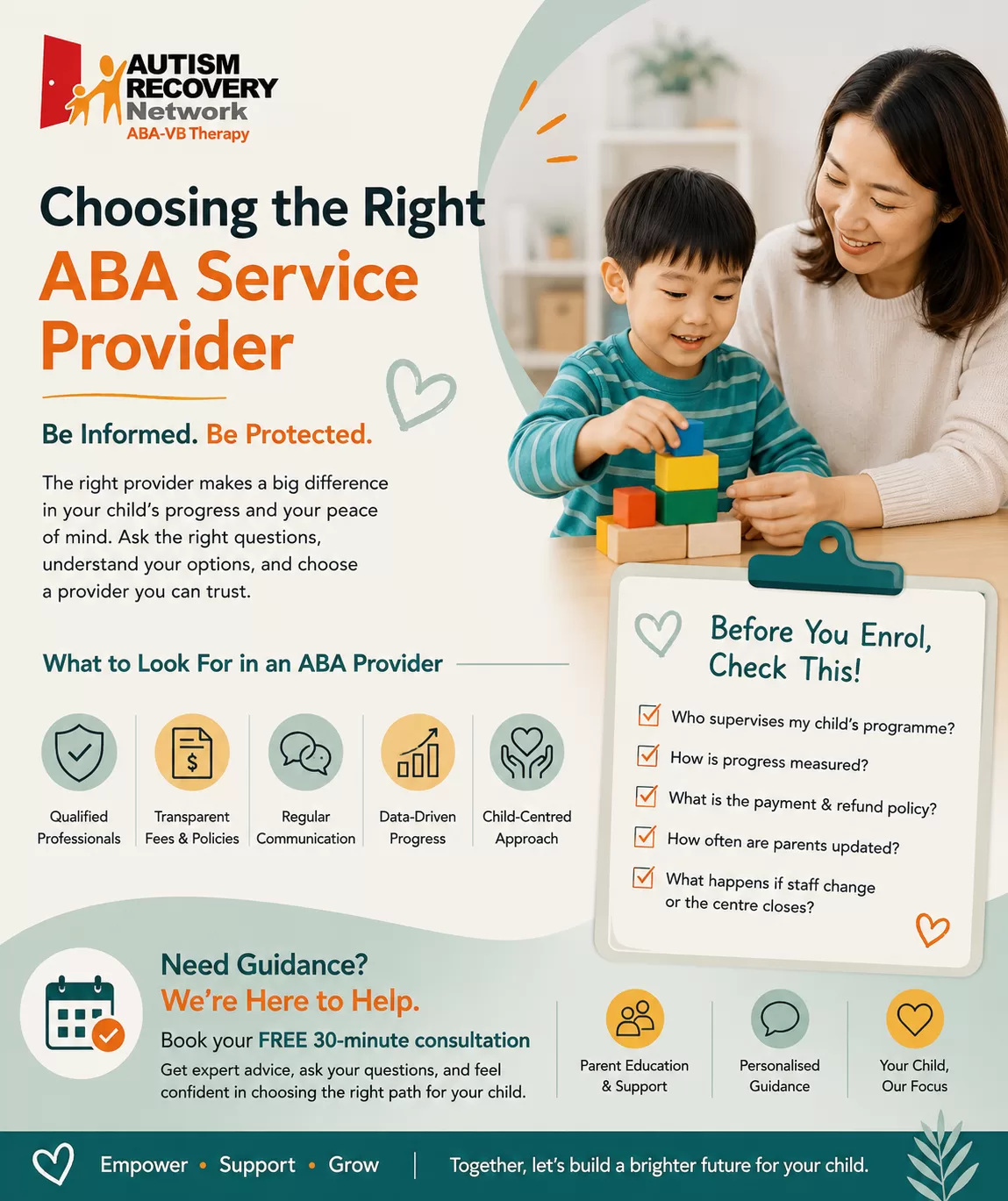
Here are eight important areas to consider before enrolling your child in an ABA programme.
1. Be Cautious About Large Upfront Payments
Some centres offer package discounts when families pay for several months of therapy in advance. However, a large upfront payment may create financial risk if your child’s needs change, your schedule changes or the provider is unable to continue delivering the agreed services.
Before paying, ask:
- Can we pay monthly?
- Is a smaller package available?
- What does the deposit cover?
- Are unused sessions refundable?
- What happens if our schedule or therapy needs change?
- Is the refund policy provided in writing?
A professional provider should clearly explain its payment arrangements and give you enough time to review them.
Be cautious if you are asked to pay immediately to secure a place before receiving clear written information about the service, fees and refund conditions.
2. Ask Who Designs and Supervises the Programme
An effective ABA programme should be based on your child’s individual strengths, developmental needs and everyday challenges.
Therapists should not simply repeat the same activities without reviewing whether they are helping your child make meaningful progress. Goals should be designed and regularly monitored by an appropriately qualified supervisor.
Ask the provider:
- Who conducts the initial assessment?
- Who selects my child’s learning goals?
- What qualifications does the supervisor have?
- Is a BCBA involved, where applicable?
- How often does the supervisor observe sessions?
- How often are goals reviewed and updated?
- How is therapist performance monitored?
- Will parents meet the supervisor regularly?
The provider should be able to explain who is responsible for making clinical decisions and how the programme will be adjusted when your child’s needs change.
3. Look for Transparency, Not Just Good Marketing
A beautiful centre, professional website or active social media page may create a good first impression. However, appearance does not necessarily show whether the therapy is high quality.
Instead of relying only on advertisements or testimonials, ask the provider to explain:
- How assessments are conducted
- How goals are selected
- How data is collected
- How progress is measured
- How often parents receive updates
- How therapists are trained and supervised
- What happens if a child is not progressing
You may also ask to see anonymised examples of progress reports, goal sheets or data-recording systems.
Online reviews can be useful, but they should not be your only source of information. Reviews may not explain the child’s needs, the type of programme provided or how progress was measured.
Pay attention to how staff respond when you ask detailed questions. Professional providers should communicate respectfully, acknowledge uncertainty and explain their methods clearly.
4. Understand Exactly What the Fees Include
ABA fees may vary depending on session length, therapist qualifications, service location and supervision requirements.
Before enrolling, request a clear written breakdown of what is included.
Ask whether the fees cover:
- Initial assessment
- Therapy sessions
- Programme materials
- Supervisor observations
- BCBA supervision, if applicable
- Progress reports
- Programme reviews
- Parent consultations
- Parent training
- School meetings or observations
You should also ask about possible additional charges.
For example:
- Are supervisor visits charged separately?
- Is there an annual assessment or subscription fee?
- Are written reports included?
- Are missed sessions charged?
- Is there a fee for changing or rescheduling sessions?
Transparent pricing allows families to compare providers fairly and reduces the risk of unexpected costs later.
5. Read the Service Agreement Carefully
A written service agreement should clearly explain what both the provider and the family can expect.
Do not feel pressured to sign immediately. Take time to read the agreement and ask questions about anything that is unclear.
Check whether it includes information about:
- Payment schedules
- Deposits
- Refund policies
- Session cancellations
- Make-up sessions
- Charges for missed sessions
- Public holidays
- Centre closures
- Therapist leave or resignation
- Schedule changes
- Expiry dates for prepaid sessions
- Ending or transferring services
Pay particular attention to what happens if the provider cannot deliver the agreed services.
Important arrangements should be confirmed in writing. Verbal promises can easily be forgotten or misunderstood.
6. Choose a Provider That Communicates Regularly
Parents should understand what their child is learning during therapy, why particular goals were selected and how progress is being measured.
A good ABA programme should include regular communication between parents, therapists and supervisors.
Updates may include:
- Parent meetings
- Written progress reports
- Session summaries
- Demonstrations of teaching strategies
- Home-practice recommendations
- Video examples, when appropriate and consented to
- Opportunities to discuss concerns
Ask how often you will receive updates and who you should contact when you have questions.
You should feel like an active member of your child’s team—not simply someone who drops off and collects the child.
Regular communication also helps families use similar strategies at home, school and in the community. This can give children more opportunities to practise and generalise their skills.
7. Be Careful of Unrealistic Promises
No ethical ABA provider can guarantee exactly how quickly a child will progress.
Be cautious of statements such as:
- “Your child will definitely speak.”
- “Your child will catch up within six months.”
- “We can remove all challenging behaviour.”
- “Your child will definitely enter a mainstream school.”
- “This programme works for every child.”
Every child has a different developmental profile, learning history, family environment and response to intervention.
A responsible provider should discuss:
- Your child’s current strengths and needs
- Realistic short-term goals
- How progress will be measured
- Factors that may affect learning
- What will happen if progress is slower than expected
Good providers are honest about both the potential benefits and limitations of intervention. They should not use fear, guilt or guaranteed outcomes to persuade parents to enrol.
8. Ask About Staff Training and Stability
Children often benefit from consistency, particularly when they are learning communication, cooperation, play and daily routines.
Staff changes can happen in any organisation. However, the provider should have a clear plan to protect the continuity of your child’s programme.
Ask:
- What qualifications and training do therapists receive?
- How are new therapists trained?
- How often are therapists observed by supervisors?
- What happens if my child’s therapist takes leave or resigns?
- How will a replacement therapist learn the programme?
- Will parents be informed about staffing changes?
- How does the centre maintain consistency between therapists?
A strong programme should not depend entirely on one therapist.
Your child’s goals, teaching procedures, data and progress should be documented clearly so that another trained team member can continue the programme when necessary.
Important Questions to Ask During an ABA Consultation
Before enrolling, consider bringing these questions to your consultation:
- Who will assess my child?
- Who will design and supervise the programme?
- What qualifications do the therapists and supervisors have?
- How will goals be selected and progress measured?
- How often will parents receive updates?
- What happens if my child is not making progress?
- What exactly do the fees include?
- What are the cancellation and refund policies?
- What happens if the therapist leaves?
- What happens if the centre cannot provide the agreed service?
A reputable provider should welcome these questions and give you enough information to make a careful decision.
Choose a Provider That Educates Rather Than Sells
The best ABA providers help families understand their options.
They should be willing to:
- Explain why a service is recommended
- Discuss possible benefits and limitations
- Answer difficult questions honestly
- Consider alternative or additional services
- Collaborate with schools and other professionals
- Respect the family’s priorities
- Give parents time to review information
Be cautious if the conversation focuses mainly on payment, limited-time discounts or securing a package before your child’s needs have been properly discussed.
You should understand what is being recommended, why it may be suitable and how the provider will evaluate whether it is helping.
ABA Therapy Should Be a Partnership
Choosing an ABA provider is not simply about finding an available therapy centre. It is about choosing a team that may work with your child and family over an extended period.
A strong partnership requires:
- Qualified supervision
- Meaningful and measurable goals
- Clear financial policies
- Regular progress reviews
- Honest communication
- Respect for the child and family
- Consistent parent involvement
Asking detailed questions does not make you a difficult parent.
It shows that you are taking an active role in protecting your child’s development, continuity of care and your family’s investment.
Most professionals enter this field because they genuinely want to support children and families. However, good intentions should be supported by appropriate qualifications, clear policies, professional supervision and accountability.
A trustworthy ABA provider should never be afraid of your questions. The team should be ready to answer them openly, respectfully and with your child’s best interests at the centre of the discussion.
Complimentary 30-Minute Parent Consultation
Choosing the right support can feel overwhelming, especially when providers offer different programmes, fees and recommendations.
Autism Recovery Network offers a complimentary 30-minute parent consultation for families who are exploring ABA services or would like a second professional opinion.
During the consultation, parents can ask questions about their child’s developmental needs, programme structure, supervision, possible learning priorities, parent involvement and service arrangements.
Our consultation is designed to provide clear and transparent information—not to pressure families into making an immediate commitment.
Every parent deserves professional guidance so they can make an informed decision for their child and family.
Contact Autism Recovery Network to arrange your complimentary 30-minute parent consultation.
This article provides general educational information and should not replace individual medical, psychological or developmental advice. The suitability of any intervention should be considered according to the child’s individual needs and in consultation with appropriately qualified professionals.
