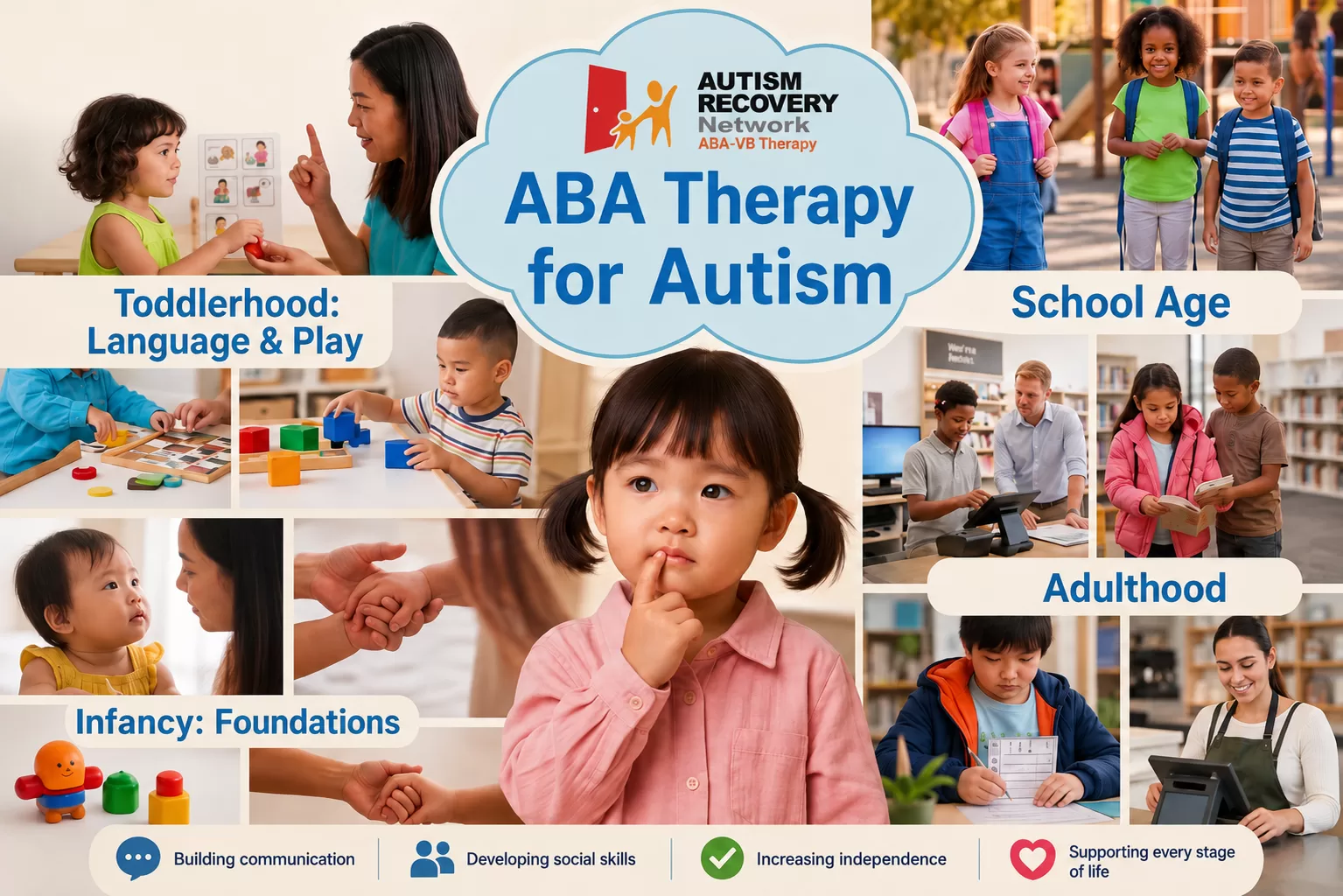
When parents first hear about ABA therapy for autism, they often think of young children learning to communicate, follow instructions, or play.
However, ABA is not limited to one age or one set of skills.
As children grow, their needs change. A toddler may be learning how to ask for something, while a school-aged child may be working on conversations and classroom independence. Later, a teenager may need support with daily living, problem-solving, or preparing for adulthood.
The goals may change, but the purpose remains the same: to teach meaningful skills that help the individual participate more independently in everyday life.
What Is ABA Therapy?
Applied Behaviour Analysis (ABA) is an evidence-based behavioural approach that focuses on how people learn and how the environment influences behaviour.
Teaching may involve breaking complex skills into smaller steps, providing practice, using positive reinforcement, and monitoring progress.
Importantly, an ABA programme should be individualised. Goals should reflect the child’s current abilities, needs, and everyday priorities.
Early Childhood: Building Communication Foundations
During the early years, children develop important foundations for communication, play, and learning.
ABA goals may include:
- Requesting wants and needs
- Using gestures, sounds, words, or other communication methods
- Imitating actions
- Following simple instructions
- Sharing attention
- Engaging in play
For example, instead of crying or pulling an adult towards a favourite toy, a child may gradually learn a clearer way to request it.
Communication does not have to begin with full sentences. A gesture, picture, sound, sign, or word can all be meaningful when they help the child communicate more effectively.
Preschool Years: Language, Play and Flexibility
As children develop, communication becomes more varied.
They may begin learning to:
- Make choices
- Ask for help
- Answer simple questions
- Play with others
- Take turns
- Wait
- Move between activities
Flexibility can also become an important goal.
A child may become upset when a preferred activity ends or a familiar routine changes. ABA teaching can help them learn alternatives, such as asking for more time, choosing another activity, waiting briefly, or following a visual schedule.
The aim is not simply to make a child comply. It is to teach skills that help them manage everyday situations more successfully.
School Age: Communication, Social Skills and Independence
School brings new expectations.
Children may need to communicate with teachers, complete activities, participate in groups, organise belongings, and cope with unexpected changes.
ABA goals may include:
- Asking and answering questions
- Having conversations
- Following multi-step instructions
- Asking for help
- Completing tasks independently
- Joining group activities
- Understanding social situations
- Coping with changes
Just as importantly, children need to use these skills outside therapy.
A child who learns to ask a therapist for help should also learn to ask a teacher or parent when needed.
This is called generalisation—using a skill across different people, places, and situations.
Teenage Years: Preparing for Real Life
As children become teenagers, intervention may focus more on practical independence.
Depending on the teenager’s needs, goals may include:
- Personal hygiene
- Preparing simple meals
- Managing money
- Shopping
- Using public transport
- Time management
- Organisation
- Problem-solving
- Social communication
- Workplace readiness
For example, learning to calculate prices on a worksheet is useful. However, being able to compare prices and choose better value in a supermarket makes the skill more functional.
The goal is to help teenagers use what they learn in real-life situations.
Adulthood: Supporting Independence and Participation
Learning does not stop at adulthood.
Some autistic adults may continue to benefit from behavioural support in areas such as:
- Employment
- Independent or supported living
- Household responsibilities
- Community participation
- Personal safety
- Communication and self-advocacy
- Managing daily routines
Support should always reflect the person’s individual goals, preferences, and environment.
Why Real-Life Practice Matters
Learning a skill during therapy is only the first step.
The bigger question is:
Can the person use that skill when it is actually needed?
That is why ABA programmes should provide opportunities to practise across different people, activities, and settings.
A child may begin learning a skill during therapy and later practise it during play, at school, at home, or in the community.
Over time, prompts and support can be reduced as independence increases.
ABA Goals Should Grow With the Child
There is no single ABA programme that fits every child or every stage of development.
A young child’s goals may focus on communication and play. Later, priorities may shift towards school participation, friendships, independence, community skills, or preparation for work.
Therefore, goals should be reviewed regularly and adjusted as the individual develops.
Effective ABA should focus on skills that are meaningful, measurable, and useful in everyday life.
Building Skills for Life
ABA therapy matters when the skills being taught matter to the person receiving support.
The purpose is not simply to complete tasks during therapy.
Instead, the goal is to help children, teenagers, and adults use what they have learned in real life—with greater communication, flexibility, participation, and independence.
From making a first request to managing daily routines or preparing for work, each stage brings new opportunities to learn.
As the individual grows, the programme should grow with them.
Need Help With the Next Step?
If your child has recently received an autism diagnosis and you are unsure what to do next, speaking with an experienced professional can help make your options clearer.
Autism Recovery Network offers a complimentary 30-minute parent consultation for families who would like to discuss their child’s needs, possible learning priorities, and available support options.
Our goal is to provide clear information so that parents can make informed decisions for their child and family.
Book your FREE 30-minute parent consultation today and take the next step with greater clarity and confidence.
