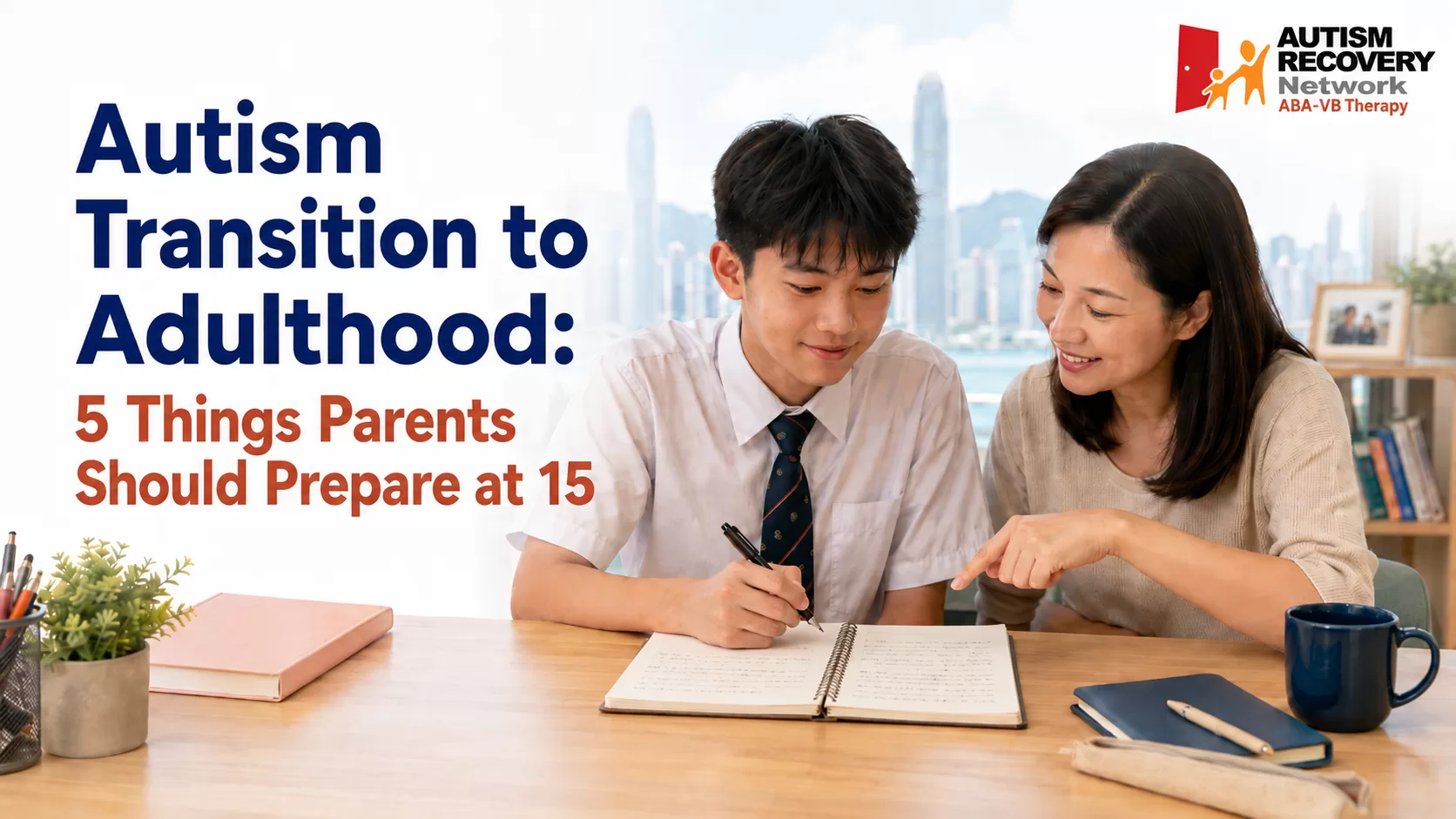
For many parents of autistic children, the early years focus on therapy, school, communication and learning.
Then the teenage years arrive, and a different question becomes more urgent:
“What will happen when my child grows up?”
Will they continue studying? Work? Travel independently? Manage money? Look after themselves?
There is no single path into adulthood for autistic young people. Some may continue into further education and employment, while others may need vocational training, supported work or ongoing assistance.
The important thing is to start preparing before school ends.
Why Start Around Age 15?
Age 15 is not a deadline. It is a useful point to start shifting some attention from school performance to adult-life preparation.
Hong Kong’s Education Bureau states that secondary schools should discuss post-school arrangements with students with SEN and their parents as early as possible, including further study, vocational education and other pathways.
Some Hong Kong vocational rehabilitation and training services are also available from age 15, making the teenage years a practical time to explore future options.
Instead of asking only:
“What does my teenager still need to learn at school?”
also ask:
“What will they need to do in everyday adult life?”
Here are five areas to start working on.
1. Education, Training and Employment
Success after school does not have to mean university.
Start noticing your teenager’s:
- Interests and strengths
- Ability to follow instructions
- Attention and work stamina
- Ability to finish tasks
- Flexibility when plans change
- Ability to ask for help
- Comfort working alongside others
Hong Kong options include VTC Shine Skills Centre, which provides vocational training for eligible learners aged 15 or above, and Integrated Vocational Rehabilitation Services Centres, which offer training in work, life, communication and employment-related skills.
At home, start with real responsibilities: completing a household job, following a schedule or arriving somewhere on time.
2. Independence and Daily Living
Academic ability and everyday independence do not always develop at the same pace.
Useful skills include:
- Personal hygiene and dressing
- Preparing simple food
- Cleaning and laundry
- Organising belongings
- Following a schedule
- Using public transport
- Shopping and using an Octopus card
- Remembering appointments
Parents naturally want to help, especially when doing something for their teenager is faster.
But independence develops through practice.
If your teenager can already complete part of a routine, give them opportunities to do that part themselves before stepping in.
3. Communication, Relationships and Self-Advocacy
Adult communication is not only about conversation.
Your teenager should also practise useful messages such as:
- “I don’t understand.”
- “Can you show me?”
- “I need help.”
- “I need a break.”
- “Please don’t touch me.”
- “I don’t feel safe.”
Teenagers also need guidance around friendships, privacy, personal boundaries, consent, workplace communication and asking for help.
The goal is not to make autistic young people behave like everyone else. It is to help them communicate their needs, make choices and participate safely in everyday life.
4. Emotional Regulation, Health and Safety
As teenagers become more independent, adults may not always be beside them when something goes wrong.
Help your teenager recognise and communicate:
“I’m getting upset.”
“It’s too noisy.”
“I’m anxious.”
“Something hurts.”
Then teach what to do next: request a break, move somewhere quieter, use a familiar calming strategy or contact a trusted person.
Safety skills should also become practical. Practise crossing roads, travelling familiar routes, remembering important contact information and knowing what to do if separated from family.
5. Community Life, Money and Future Planning
Adulthood happens in real environments—not just classrooms.
Whenever possible, practise skills where they will actually be used:
- Order food
- Buy something independently
- Travel a familiar MTR route
- Ask staff for assistance
- Manage a small budget
- Check change
- Keep belongings safe
- Recognise basic online and scam risks
Families can also begin thinking about longer-term questions: future caregiving, financial arrangements, adult services and the amount of support their child may need.
You do not need to solve everything at 15. Starting the conversation early simply gives your family more time.
A Simple Parent Check at Age 15+
Ask yourself:
- What can my teenager already do without my help?
- Which everyday tasks still require frequent prompting?
- How well can they communicate when something goes wrong?
- What education, training or employment pathways might match their strengths?
- Which one practical adult-life skill can we start practising now?
Review these questions as your teenager develops.
Don’t Wait Until Graduation
A teenager who has always had someone organise their belongings, order their food and solve every problem cannot be expected to suddenly do everything independently at 18.
Start small.
Let them carry their own Octopus card. Let them order their own drink. Give them a regular household responsibility. Practise one familiar journey.
The goal does not have to be complete independence.
Some autistic adults will continue to need significant support. The goal is to help each young person develop the greatest possible independence, participation, safety and quality of life for them.
Not Sure Where to Start?
Autism Recovery Network (ARN) Hong Kong offers a FREE 30-minute Parent Consultation for families who would like to discuss their teenager’s current skills, challenges and possible priorities for adulthood.
Preparing for adulthood does not begin when school finishes.
It begins by turning today’s small skills into tomorrow’s real-life abilities.
