For many parents, talking about body boundaries, privacy and consent can feel uncomfortable.
When should you start? How much should you explain? What if your child has limited speech? What if they cannot tell you when something feels wrong?
These conversations are not only about sexuality. They are about safety, consent, communication, privacy and independence.
For some autistic children and teenagers, these ideas may need to be taught more explicitly rather than assumed. Hong Kong’s Education Bureau also recognises that autistic students may need clear teaching and visual support for social understanding. Pasted markdown
Why Body Boundaries Matter
Parents are often concerned about more than whether their child knows which body parts are private.
They may wonder:
- Can my child say “No” or “Stop”?
- Will they know when someone is behaving inappropriately?
- Can they ask for help?
- Do they understand when a caregiver is helping with personal care?
- Can they tell me if something happened?
As children grow, they may spend more time with teachers, therapists, helpers, relatives, transport staff and activity instructors. The goal is therefore not simply to teach, “Nobody touches private parts.”
Children also need to learn:
This is my body. I have boundaries. Other people have boundaries too. I can say no, ask for help and tell someone when something feels wrong. Pasted markdown
Cooperation Is Good. Blind Compliance Is Not.
Autism does not mean a young person cannot learn about consent or personal safety.
However, some autistic teenagers may interpret language literally, find it difficult to judge another person’s intentions, or have difficulty explaining an event afterwards.
Some children are also taught from a young age to follow adult instructions.
That is why one distinction is important:
Cooperation is a useful skill. Blind compliance is not.
A young person can learn to follow appropriate instructions while also learning that they can refuse unsafe touching, ask what is happening, request another adult or seek help. Pasted markdown
Parents can also review the Hong Kong Social Welfare Department’s child protection information.
“Private Parts” Is Only the Beginning
Knowing which body parts are private is useful, but body-safety education needs to go further.
Children and teenagers also need to understand:
Privacy: Where is it appropriate to change clothes or use the toilet?
Consent: Can I say no? Do I need to ask before hugging someone?
Safe helping: When might a parent, caregiver or medical professional need to help with my body?
Relationships: What behaviour is appropriate with family members, teachers, friends, therapists or strangers?
Digital safety: Should I send private photographs? What should I do if someone online asks for personal information?
Using correct anatomical words where appropriate can also make teaching and later communication clearer. Pasted markdown
An Age-by-Age Approach
Body safety should not suddenly begin at puberty.
Around Ages 4–7: Body Ownership
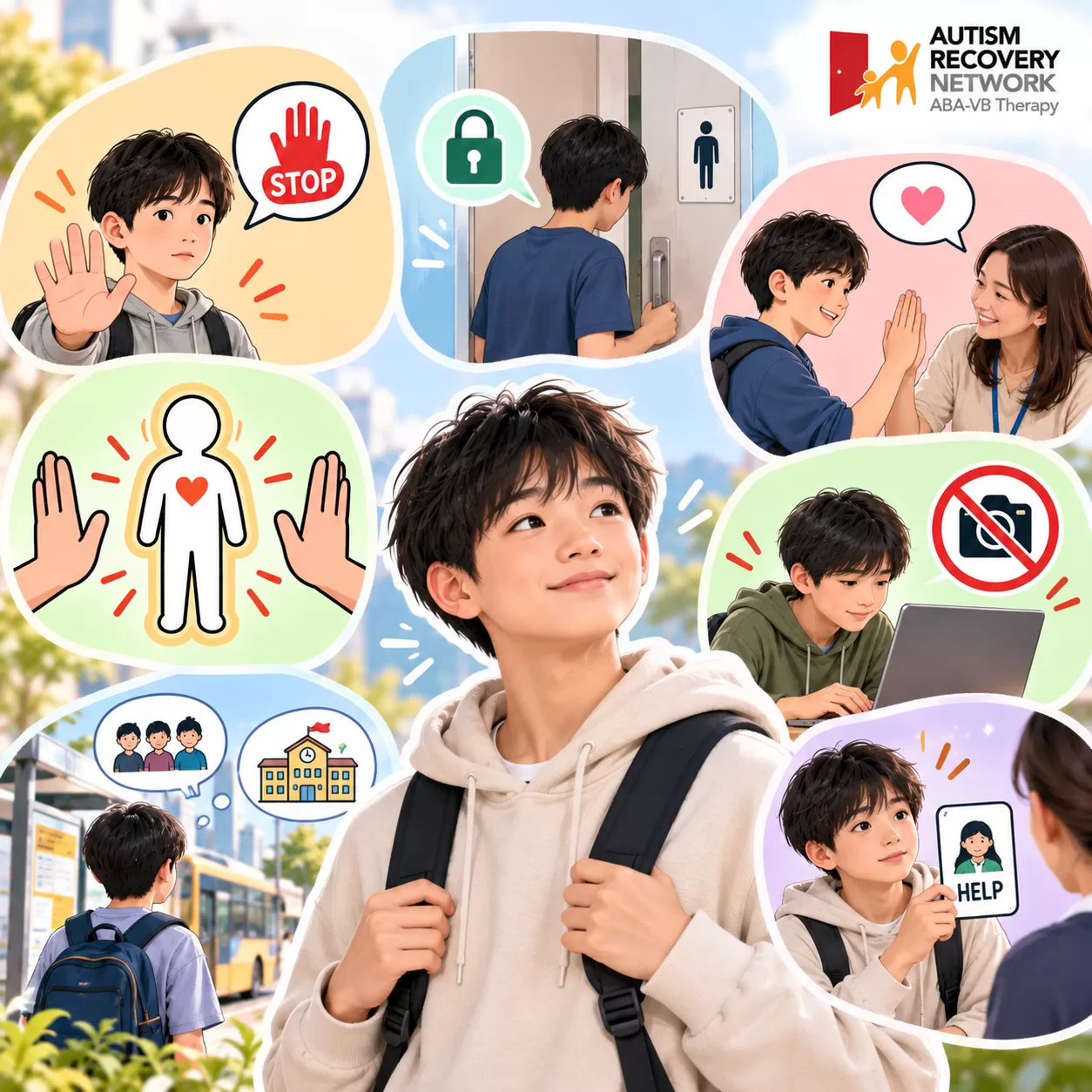
Teach body-part names, private versus public places, closing bathroom doors and simple responses such as:
“No.” “Stop.” “Help.”
Children can also learn who their trusted adults are.
Around Ages 8–11: Privacy and Permission
Teach knocking before entering, asking before touching someone, personal space, appropriate versus inappropriate situations and basic preparation for puberty.
Around Ages 12–14: Puberty, Consent and Relationships
Teaching can include hygiene, menstruation, erections and private behaviours where relevant.
Discuss consent, friendships, romantic interest, personal space, photographs, social media and what to do when someone pressures them.
Around Ages 15–18: Independence and Real-Life Safety
Older teenagers may need practice with dating, mutual consent, public toilets, changing rooms, travelling independently, medical appointments, online safety and interacting with unfamiliar adults.
Importantly, chronological age should guide what safety information a teenager needs, while the teaching method can be adapted to their communication and learning level. Pasted markdown
Hong Kong parents can also refer to the Education Bureau’s sex education resources.
What If My Child Cannot Tell Me What Happened?
A teenager does not need fluent speech to learn how to ask for help.
Consider teaching a simple communication system such as:
- A HELP card
- A STOP symbol
- A red/green safety card
- A gesture
- An AAC button
- A simple choice board
A useful sequence might be:
Something happened → I don’t like it → STOP → HELP → trusted adult.
Practise this during everyday teaching—not only during emergencies.
For children who cannot reliably report their day, parents may also keep brief, objective records of changes in behaviour, unexplained injuries, unusual avoidance of people or places, mood, personal-care support and transport arrangements.
One behaviour alone does not prove that something harmful happened, but unusual patterns should be taken seriously and followed up appropriately. Pasted markdown
Five Questions When Introducing a New Carer
When a new helper, therapist, tutor or caregiver becomes involved, parents can clarify:
- Which personal-care tasks will you handle?
- What will you do if my child says “No” or moves away?
- How will incidents or injuries be reported?
- When will you be alone with my child?
- What are the rules about phones, photographs, bathrooms and physical contact?
Clear expectations create accountability for everyone. Pasted markdown
Teach Boundaries Like Any Other Skill
Body safety should not depend on one conversation.
Skills can be broken into small steps, modelled, practised and generalised across people and places.
At Autism Recovery Network, individualised ABA-VB programmes may support functional communication, self-advocacy, social understanding, asking for help, recognising boundaries and practising safety-related skills according to the learner’s needs. Pasted markdown
If you are unsure where to begin, Autism Recovery Network offers a FREE 30-minute parent consultation with an ARN Supervisor.
Parents can discuss their child’s current communication, independence and safety skills and explore practical teaching priorities or whether individualised ABA-VB support may be appropriate.
The goal is not to make children afraid of the world. It is to give them the skills to recognise boundaries, communicate clearly, seek help and participate more safely and independently.
