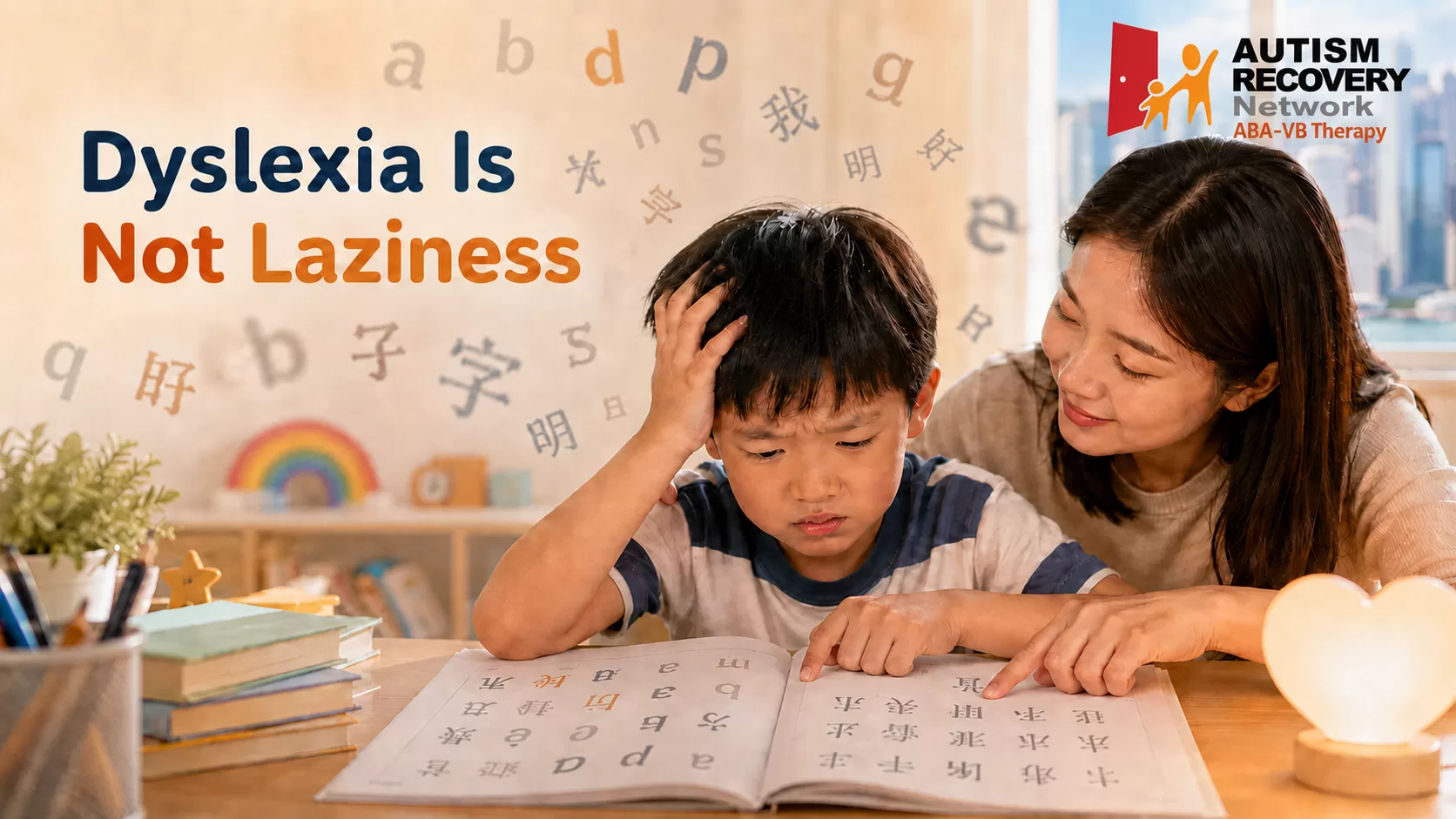
Does your child avoid reading, take much longer than expected to finish homework, or repeatedly forget words they have practised?
It can be easy to assume they are careless or “not trying hard enough.” However, persistent reading and writing difficulties may have another explanation.
Dyslexia is a specific learning difficulty that affects reading, spelling and written language. A child with dyslexia can be bright, motivated and hardworking while still finding reading and writing much harder than their classmates.
Understanding the signs early can help parents move from frustration to more appropriate support.
How Common Is Dyslexia in Hong Kong?
Dyslexia is one of the most common specific learning difficulties.
According to Hong Kong’s Department of Health Child Assessment Service, the reported prevalence of dyslexia among Hong Kong children is approximately 9.7% to 12.6%.
This means that reading and writing difficulties are not unusual—and a child who struggles is certainly not alone.
Signs of Dyslexia at Different Ages
Dyslexia can look different as school demands increase.
Preschool and Early Primary
Parents or teachers may notice:
- Difficulty remembering letters, sounds or word patterns
- Trouble learning rhymes
- Difficulty recognising or remembering Chinese characters
- Slow or inaccurate reading
- Guessing unfamiliar words
- Frequent spelling, dictation or copying mistakes
- Needing much more repetition than classmates
Some preschool children may also show early difficulties with skills linked to later literacy development. Hong Kong’s Child Assessment Service has developed a local Dyslexia Early Screening Scale to help qualified professionals identify children who may be at risk.
Upper Primary
As reading and writing become more demanding, a child may:
- Read slowly and with considerable effort
- Struggle with longer passages
- Have difficulty remembering what was read
- Find written expression difficult
- Take much longer to complete homework
A child may understand a topic well when it is explained verbally but struggle to demonstrate the same knowledge through reading or writing.
Secondary School
By secondary school, the difficulty may affect several subjects.
Students may struggle with:
- Reading large amounts of information quickly
- Note-taking
- Written assignments
- Organising ideas
- Spelling and written expression
- Completing examinations within the available time
Over time, repeated difficulty may also affect confidence, particularly when the student is working hard but still feels they are falling behind.
How Can Parents Get a Dyslexia Assessment in Hong Kong?
If you are concerned, start by speaking with your child’s class teacher, SENCO or Student Support Team.
The Education Bureau advises parents who suspect a specific learning difficulty to contact the school so appropriate support and follow-up can be arranged.
Depending on the child’s age and circumstances, assessment may involve an Educational Psychologist.
For children under 12 with broader developmental or learning concerns, parents can also discuss their concerns with a doctor. Hong Kong’s Child Assessment Service assesses children with developmental problems including dyslexia, attention, language and learning difficulties.
An assessment is useful because it helps identify not only whether dyslexia is present, but also the child’s strengths and the areas that need support.
What Support Can Schools Provide?
Support should be based on the individual child rather than using the same approach for everyone.
Hong Kong’s Education Bureau recommends a tiered approach for students with dyslexia. Depending on need, support may include:
- Structured literacy teaching
- Multisensory instruction
- Small-group or individual intervention
- Adjustments to teaching materials
- Additional classroom support
- Extra time or other examination accommodations
The Education Bureau also recommends monitoring progress and providing more intensive support when difficulties persist.
For reading intervention itself, explicit and systematic literacy instruction is particularly important. The International Dyslexia Association describes Structured Literacy as an effective approach for students with dyslexia and other significant reading difficulties.
Can ABA-VB Support a Child With Dyslexia?
ABA-VB does not cure dyslexia and should not replace specialised literacy intervention.
However, some children with dyslexia also struggle with skills that affect how successfully they participate in learning. An individualised ABA-VB programme may complement academic support by working on areas such as:
- Attention and learning readiness — remaining engaged during teaching
- Following instructions — completing one- or multi-step directions
- Language skills — understanding questions, building vocabulary and expressing ideas
- Task persistence — gradually completing difficult work without giving up
- Independent learning — completing activities with fewer adult prompts
- Coping skills — managing frustration when reading or writing feels difficult
ABA strategies can also break a difficult task into smaller, achievable steps and use positive reinforcement to encourage effort and progress.
The key is to identify why a child is struggling. Dyslexia-specific reading difficulties require appropriate literacy teaching, while other barriers such as attention, language, frustration or learning habits may need additional support.
How Can Parents Help at Home?
Home practice does not have to mean long worksheets every evening.
Instead:
- Keep reading practice short and manageable.
- Read together and discuss the story.
- Use audiobooks alongside printed books when helpful.
- Break longer instructions into smaller steps.
- Give your child enough time to respond.
- Praise effort, strategies and improvement—not only speed or correct answers.
Most importantly, avoid comparing your child with siblings or classmates.
A child who reads slowly may still understand complex ideas, solve problems creatively and have strengths in many other areas.
Not Sure What Support Your Child Needs?
If your child is struggling with reading, language, attention, learning readiness or schoolwork, professional guidance can help you understand which areas may need further assessment or support.
Autism Recovery Network (ARN) offers a FREE 30-minute parent consultation with our supervisors. Parents can discuss their concerns, understand their child’s current learning needs and explore appropriate next steps.
Early understanding can turn frustration into a clearer direction for learning.
