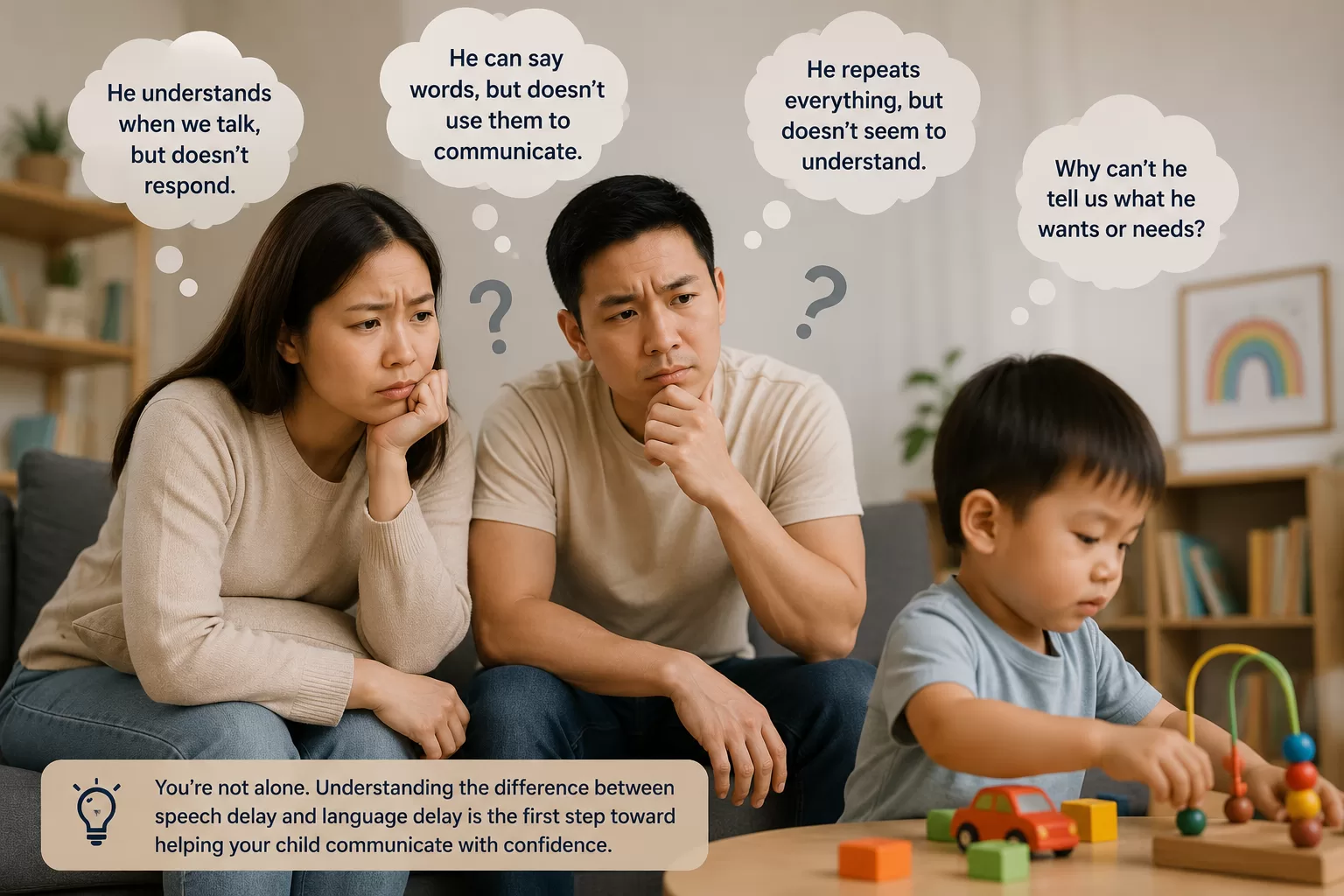
When a child is not talking as expected, many parents are told to “wait and see.” But not all communication delays are the same—and knowing the difference can help you find the right support earlier. A child who struggles to say words may have a different challenge from a child who struggles to understand, use or connect words with meaning.
As therapists who help kids with their behavior, we meet a lot of parents who say things like “My child can talk but they cannot tell me what they need” or “My child repeats words but they do not seem to understand what they mean”. These are signs that might mean your child has a speech delay or a language delay.
What Is A Speech Delay
A speech delay is when a child has trouble making the sounds when they talk. They might know what they want to say but they just cannot say it clearly.
For example a child might want “water”. All they can say is “wa-wa”.
In terms: they know what they want to say but saying it is hard for them.
What is A Language Delay
A language delay is when a child has trouble understanding and using words in a way that makes sense. This includes asking for things, answering questions, following directions and telling people what they need.
For example a child might be able to say “water” when you ask them to. But cannot ask for it on their own when they are thirsty.
In terms: the child might be able to say the words but they do not really understand what they mean or how to use them.
Why This Difference Matters
Speech is about how words sound when you say them. Language is about how words work and what they mean.
This difference matters because the help your child gets should be based on what they need.
As a behavior therapist, we know that communication and behavior are closely connected. When kids cannot express themselves they can get really frustrated. That can lead to tantrums, crying and other behaviors that are hard to deal with.
How ABA-Verbal Behavior Therapy Helps
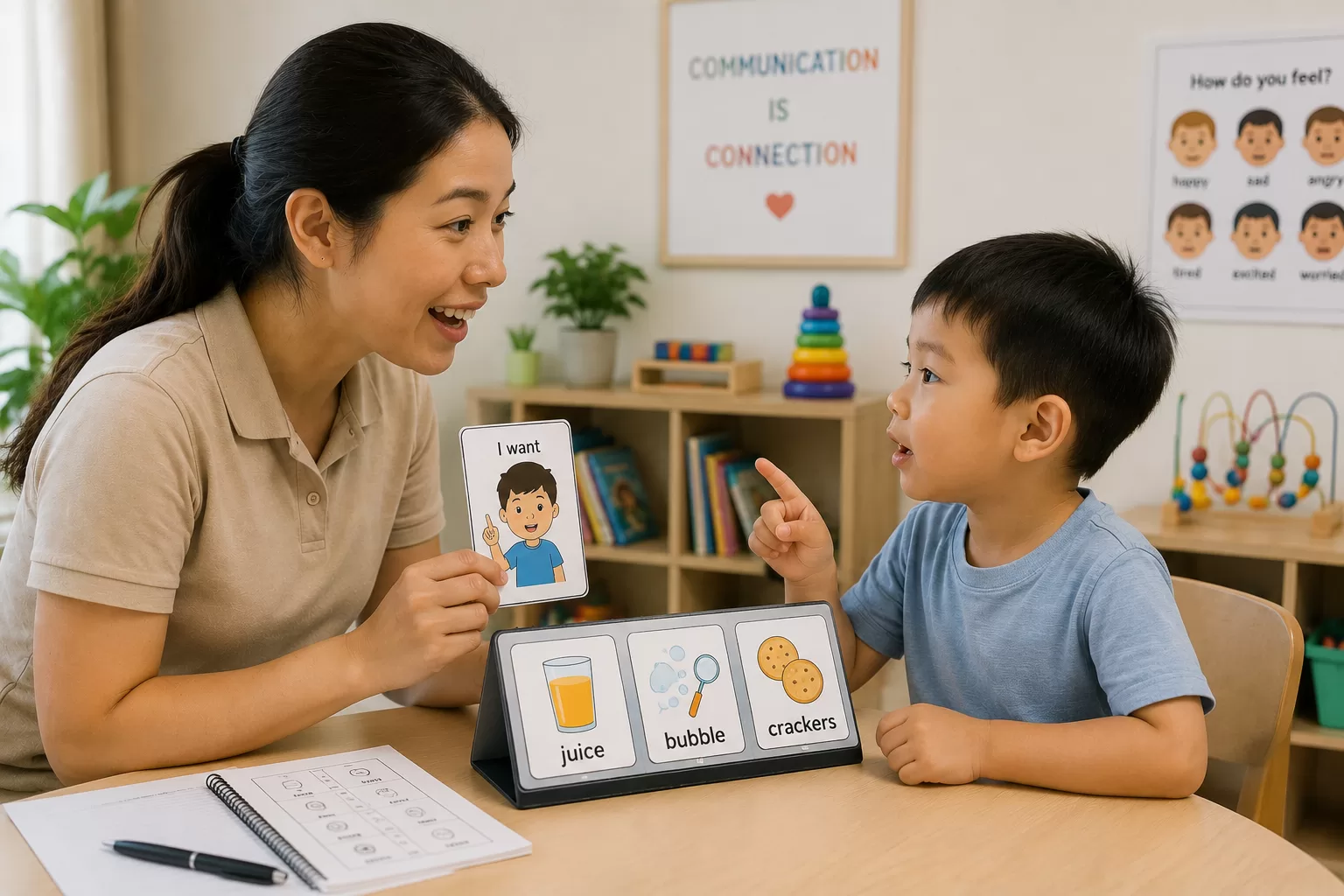
ABA-Verbal Behavior therapy is a type of therapy that focuses on teaching kids how to use language in a way that’s meaningful. It not limited to just saying words. It helps kids learn to:
* Ask for what they want
* Tell people what they need and how they feel
* Answer questions
* Follow directions
* Use communication in their life
For kids with a language delay ABA therapy breaks down communication into smaller steps that are easier to learn and it rewards progress in ways that are meaningful. This helps reduce frustration and makes kids more independent.
When Should Parents Seek Help
If your child:
* Does not communicate much for their age
* Has trouble expressing their wants and needs.
* Has trouble understanding directions
* Repeats words without using them in a way that makes sense
It might be time to get some help. Getting help early can make a difference.
From a behavior therapist’s perspective, communication is a foundational skill that supports a child’s learning, independence, and relationships. If you are worried about your child’s communication, getting ABA support can be an important step in helping them build the language skills they need to become more confident and connect better with the people around them.
A Message to Parents
If your child is struggling with communication, waiting can feel easier than acting. Language development is one of the most important foundations for your child’s future. The earlier a child learns to communicate the more opportunities they have to build, relationships learn confidently, they were able to express emotions and navigate the world independently.
If you are noticing signs of speech or language delay, reaching out for support can be the first step toward meaningful progress. With the intervention, guidance and consistency; communication can grow and so your child’s confidence.
Because every child deserves to be understood. Every parent deserves support, in helping them get there. Call us for free consultation to know more about the type of intervention that is right for you.
